Showing posts with label Nikon D80. Show all posts

Thursday, February 5, 2009

Stalking Elephant Seals, Crocodile Hunter Style

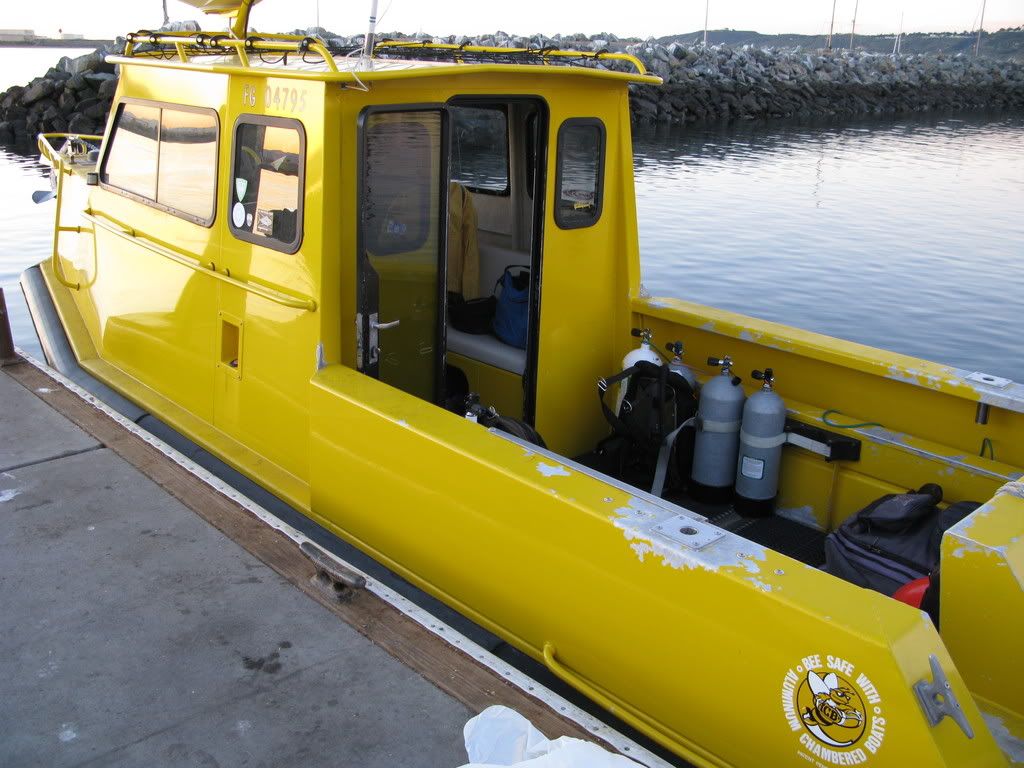
On Tuesday (yes, I said Tuesday - one of the fringe benefits of working for myself and being between corporate jobs), Roger Uzan and I chartered a little yellow boat called the Andrea M for the day. We were supposed to be a group of three, but our third had a family emergency and had to back out.


Our plan was to eventually reach the Coronado Islands in Mexican waters, but to take our time getting there. We checked out several floating kelp paddies along the way, but didn't find any pelagics or unusual critters. We came across three pods of California Grey Whales, two groups of white-sided dolphins, and a solo dolphin heading somewhere else very fast. None of them wanted to stay and play.

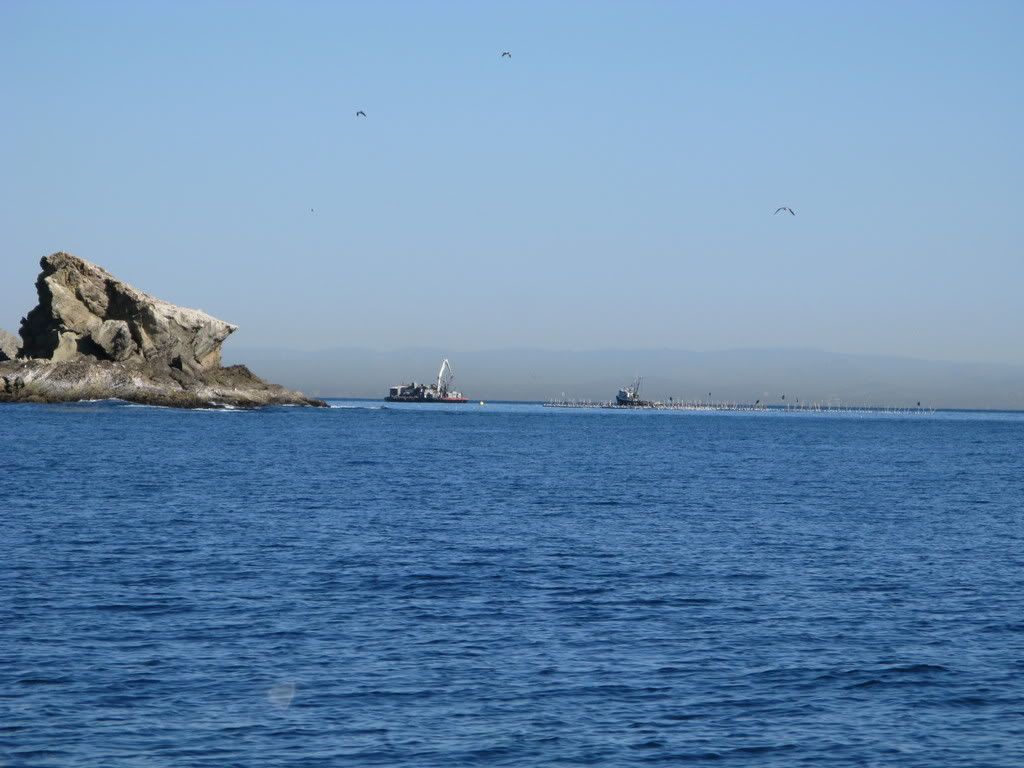
We finally got to South Coronado Island. I didn't know that there were pens holding farmed tunas.

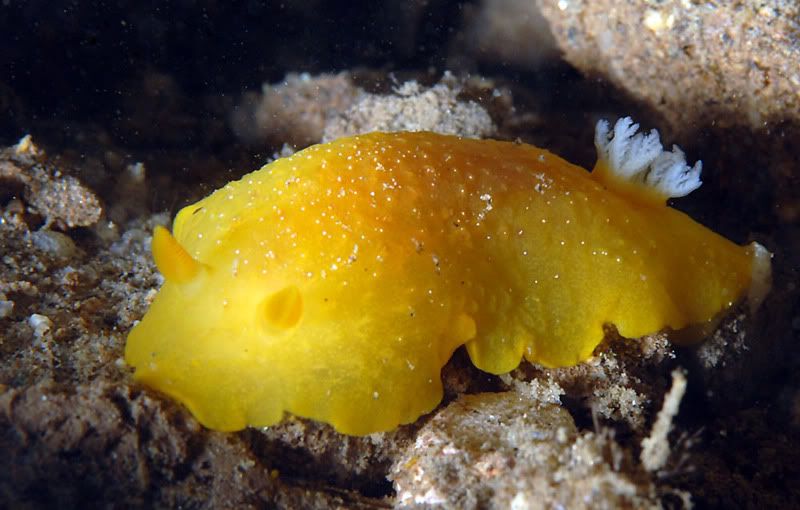
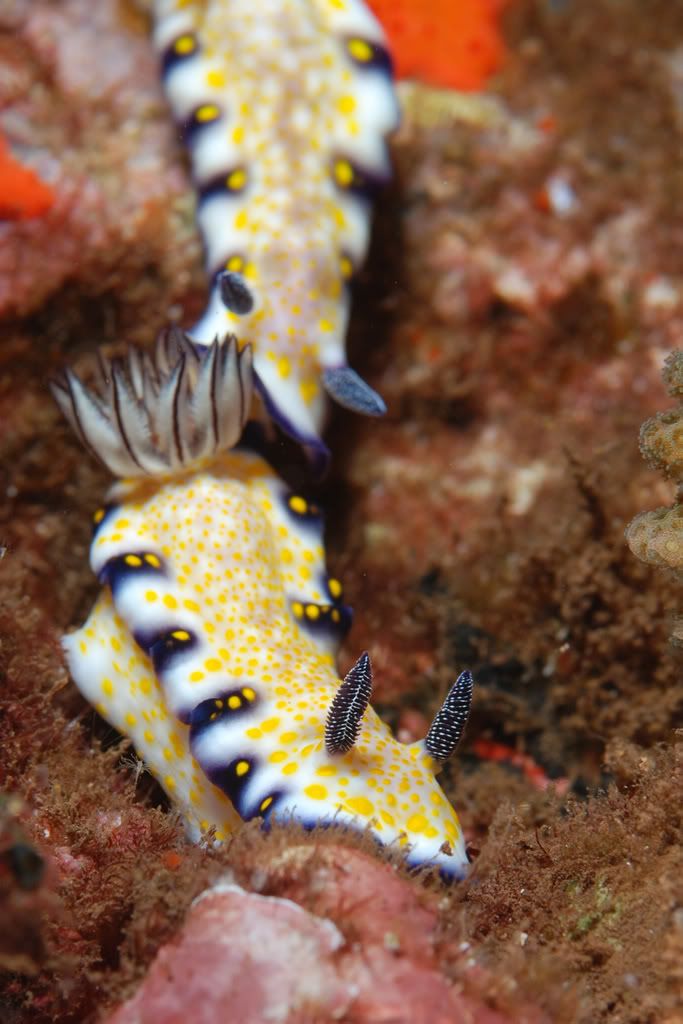
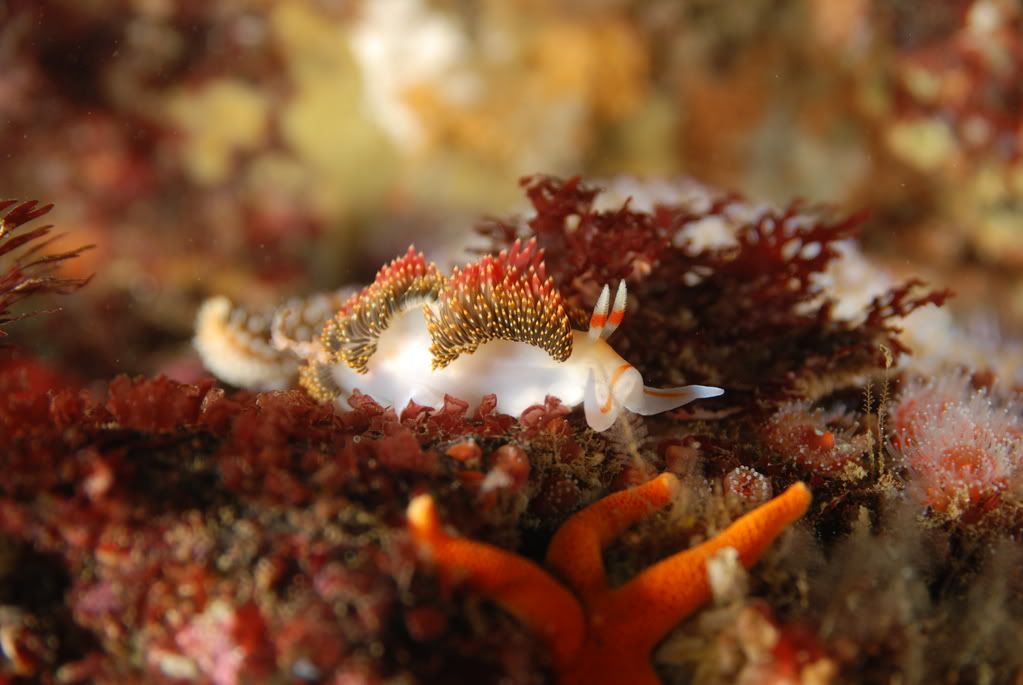
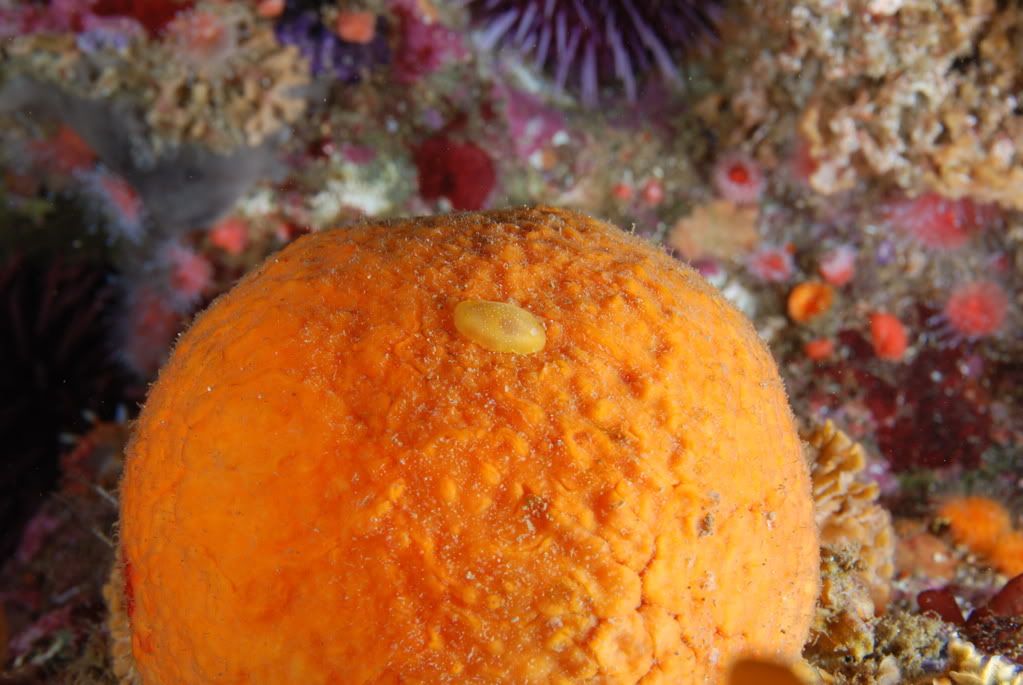
We dropped into the water south of the island, on top of a pinnacle at 55 feet of depth. The site was crazy with nudibranches. I easily spotted a dozen species in the first ten minutes. Here are a couple photos from that site.
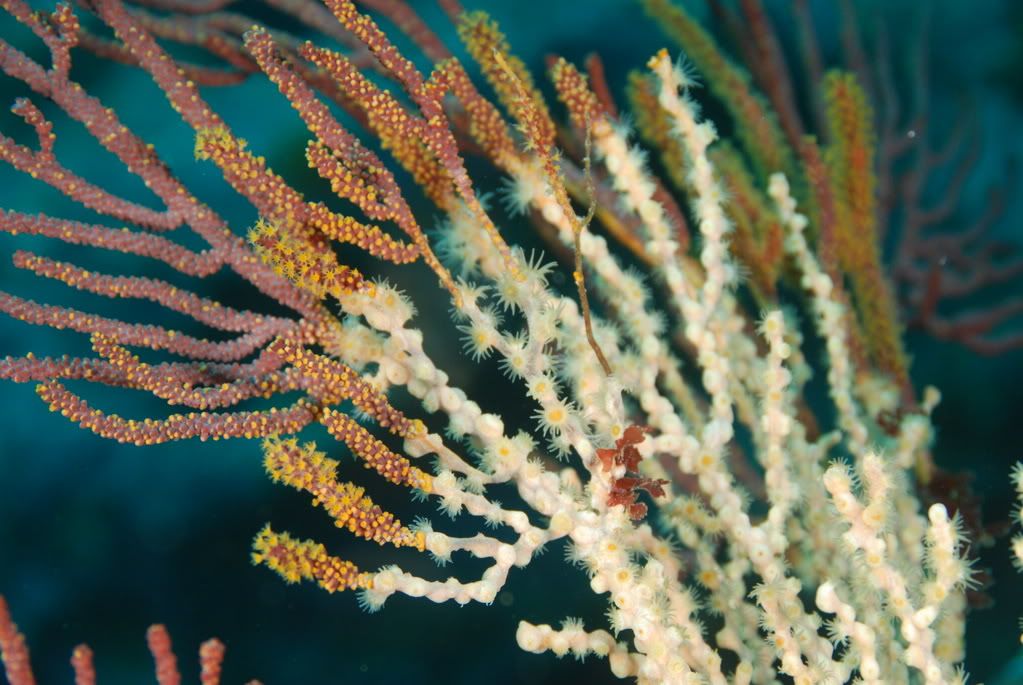
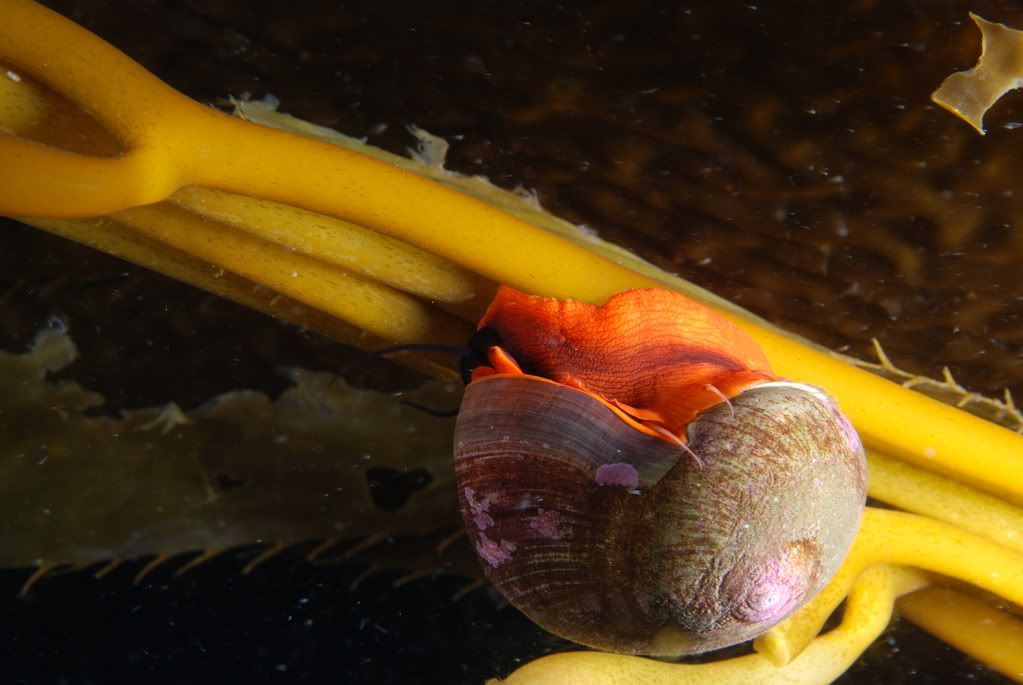
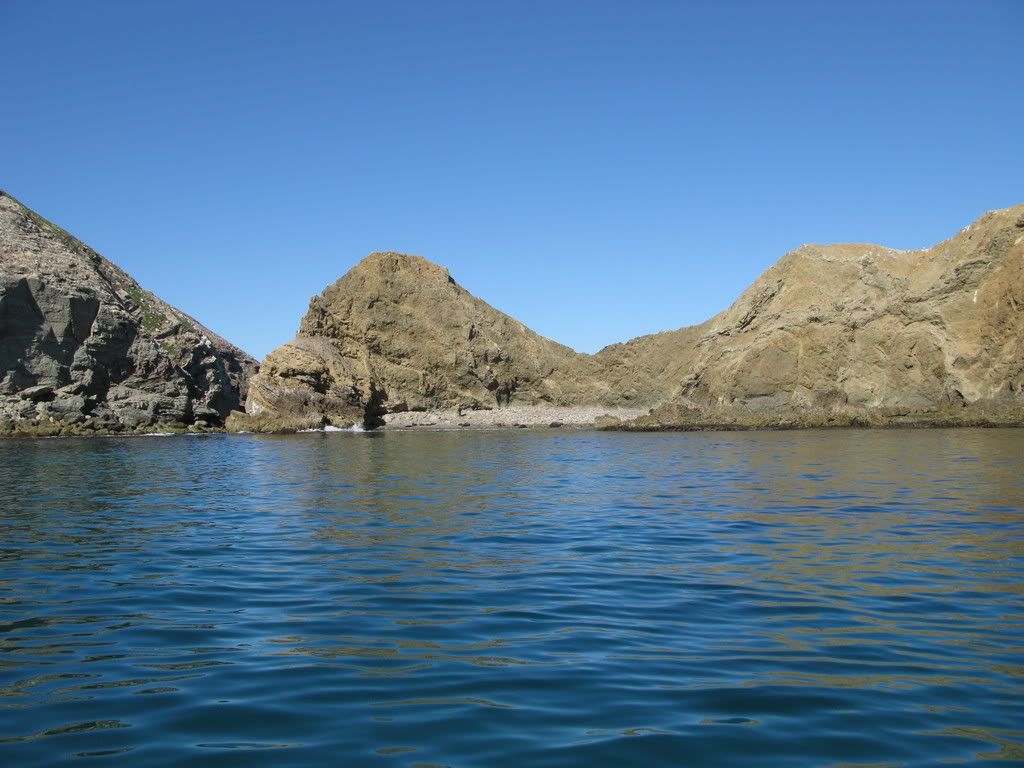
We then took the boat around to Middle Coronado Island. There is a particular beach on which you can usually find a colony of elephant seals. In the photo below, you can see the beach from where we had the boat anchored. We decided to see how close we could get to take photos of the seals. It was Roger's idea to swim underwater along the left side of the cove and crawl through the shallows to get near the beach. As we got into the water, I had a strange feeling that I guessed was a lot like the Crocodile Hunter might have had when somebody suggested that he grab a crocodile or touch that final stingray.

The approach worked well. Actually, the elephant seals didn't seem to mind us, although the female next to the big male was keeping a wary eye on us.
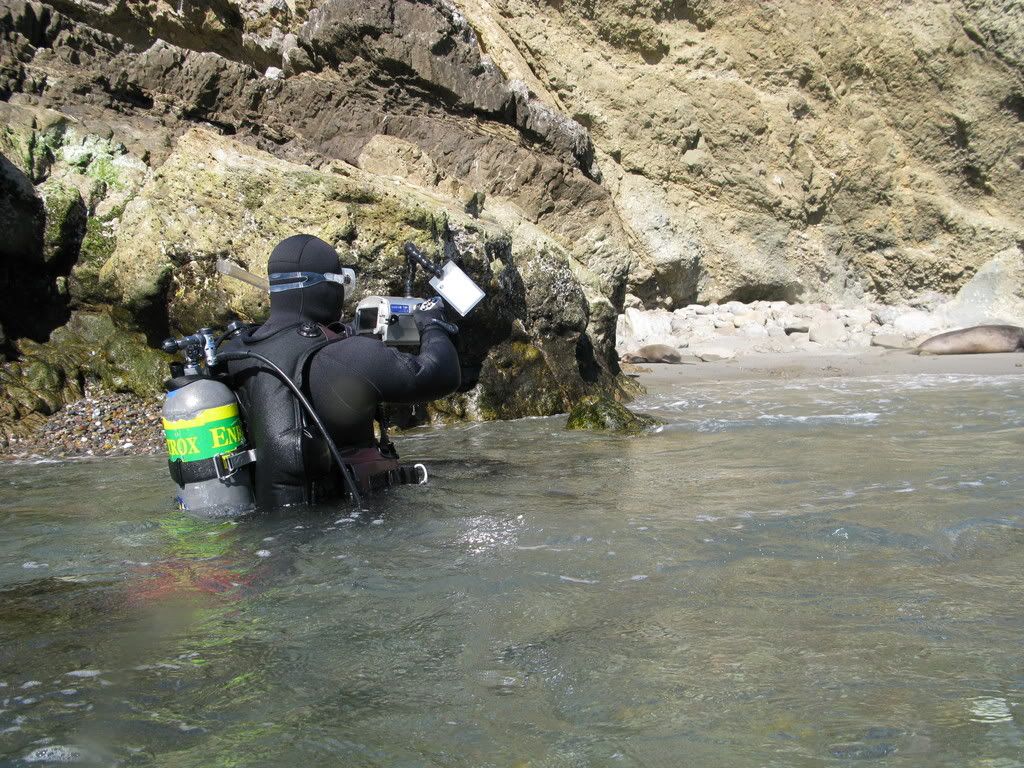
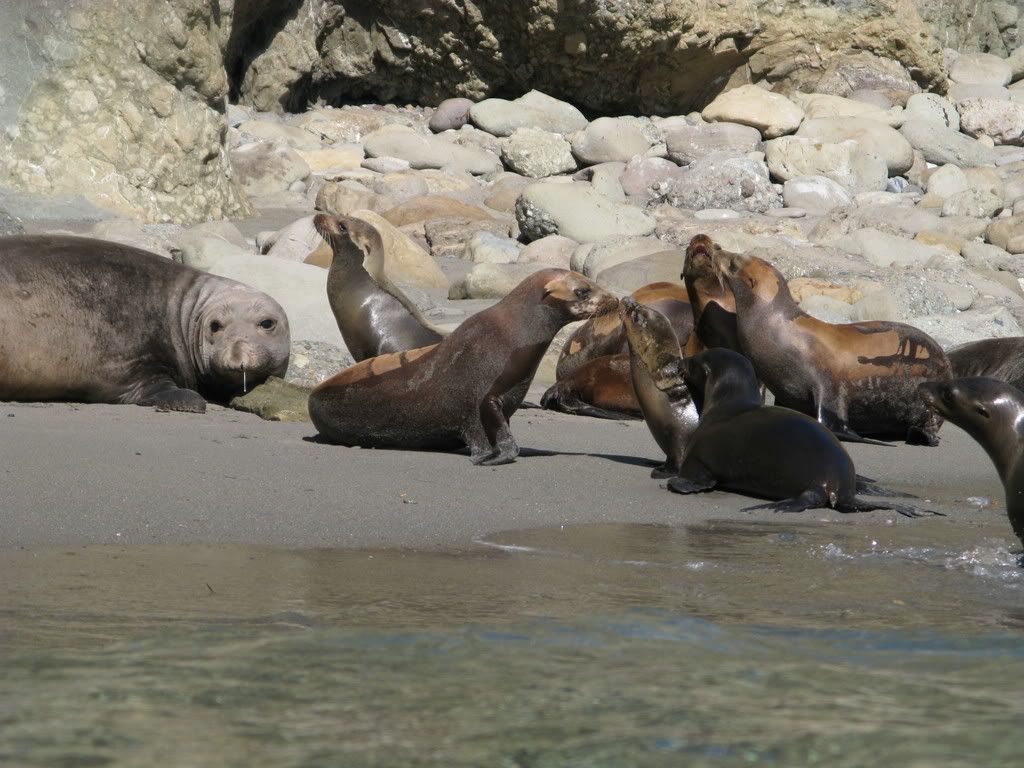
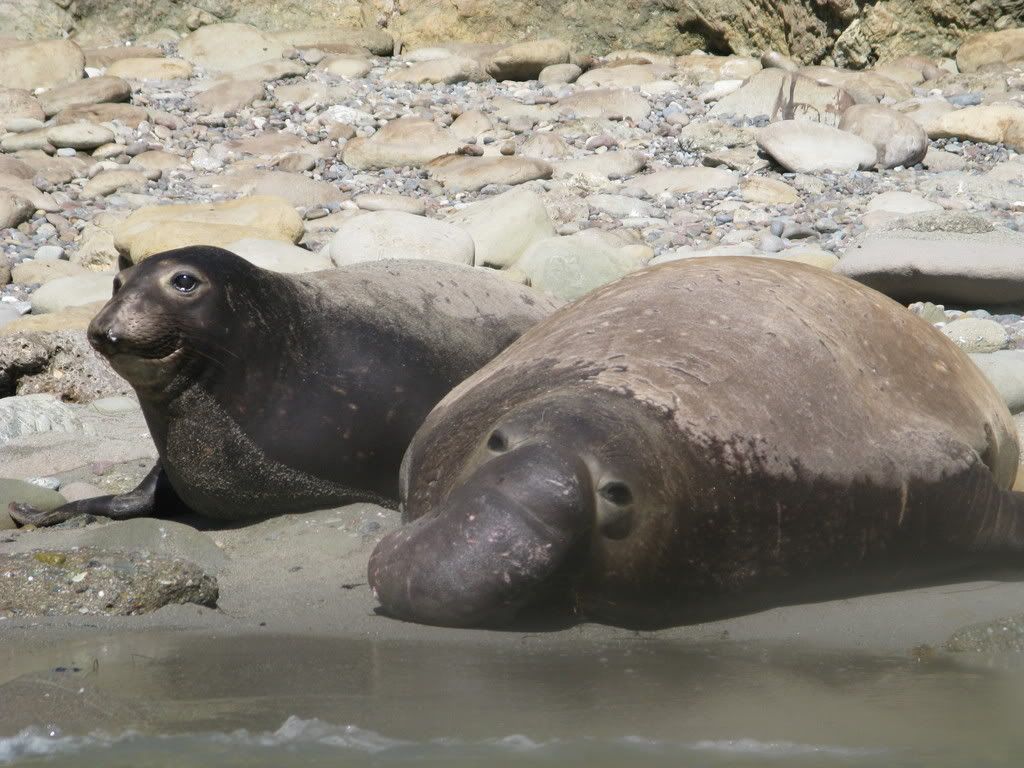
According to National Geographic, bull elephant seals can be 20 feet long and 8,800 pounds. I've seen bigger ones on television, but I bet this one weighed 6,000 pounds. Even though I was in mid-thigh deep water in front of him (and you can see that he is at the water's edge), he barely even opened an eye to see me. His girlfriend was keeping her wary eyes on us the whole time.

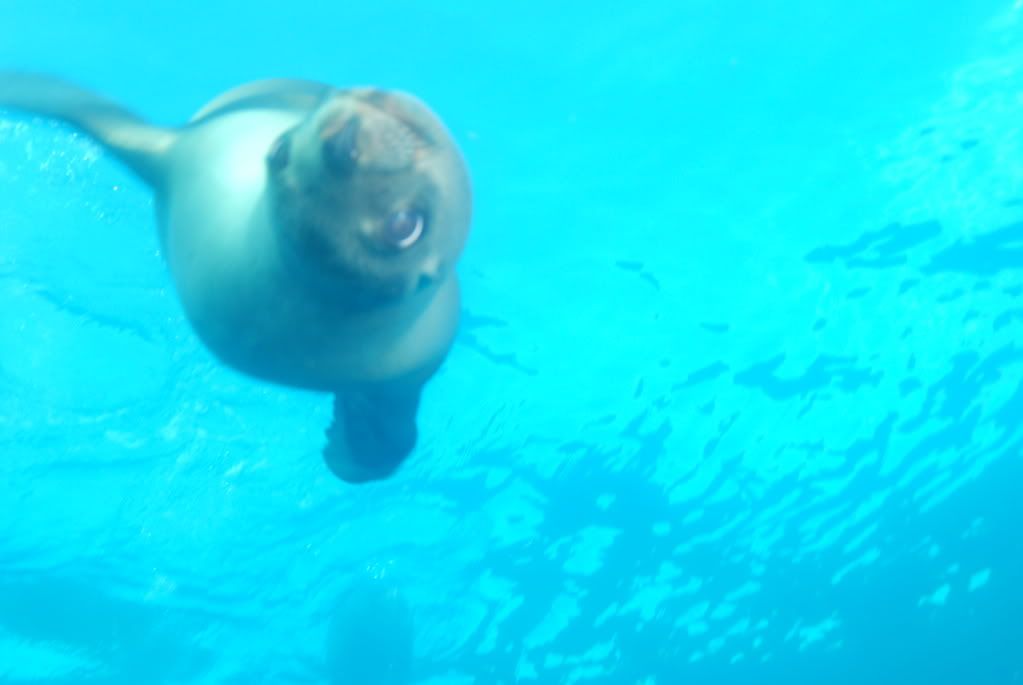
While we waited and hoped that the elephant seals would take a swim, we had a many sea lions to keep us company.

INSERT MOVIE HERE

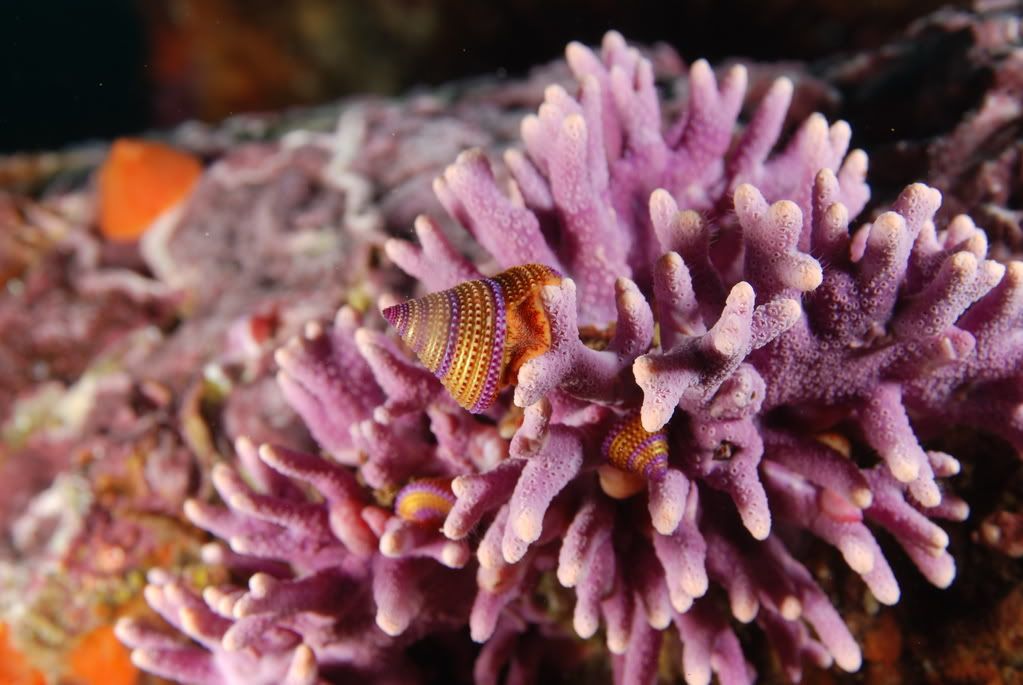
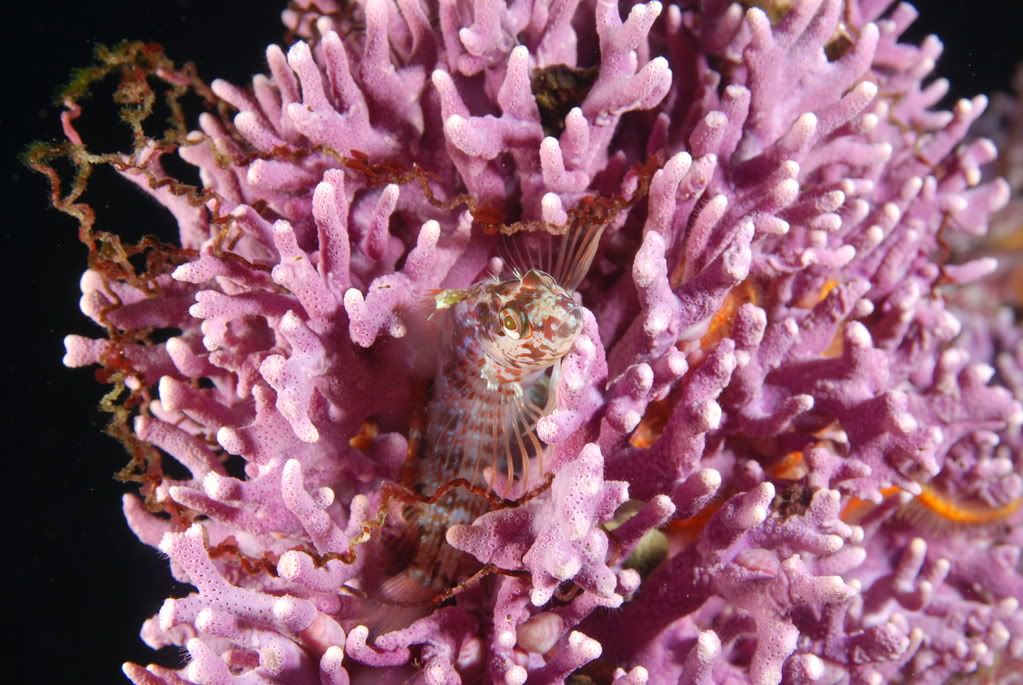
After a bite to eat, we went up to the south end of North Coronado Island. This is the side less frequented by dive boats, away from known dive sites like Keyhole and Lobster Shack. Our boat captain, Danny, knew a location where rare Purple Hydrocoral could be found. Its deep, though, usually in the 80-120 foot range. We found our first piece at 50 feet and a large quantity around 100 feet deep. We also found a nice cabezon. The sea lions were around again to entertain us.
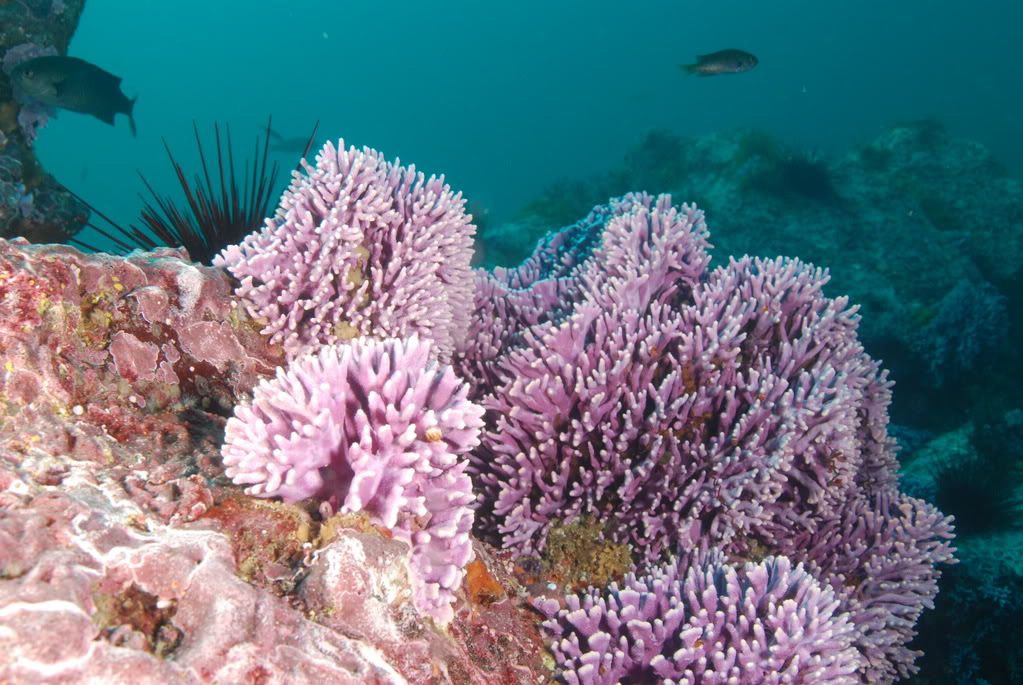
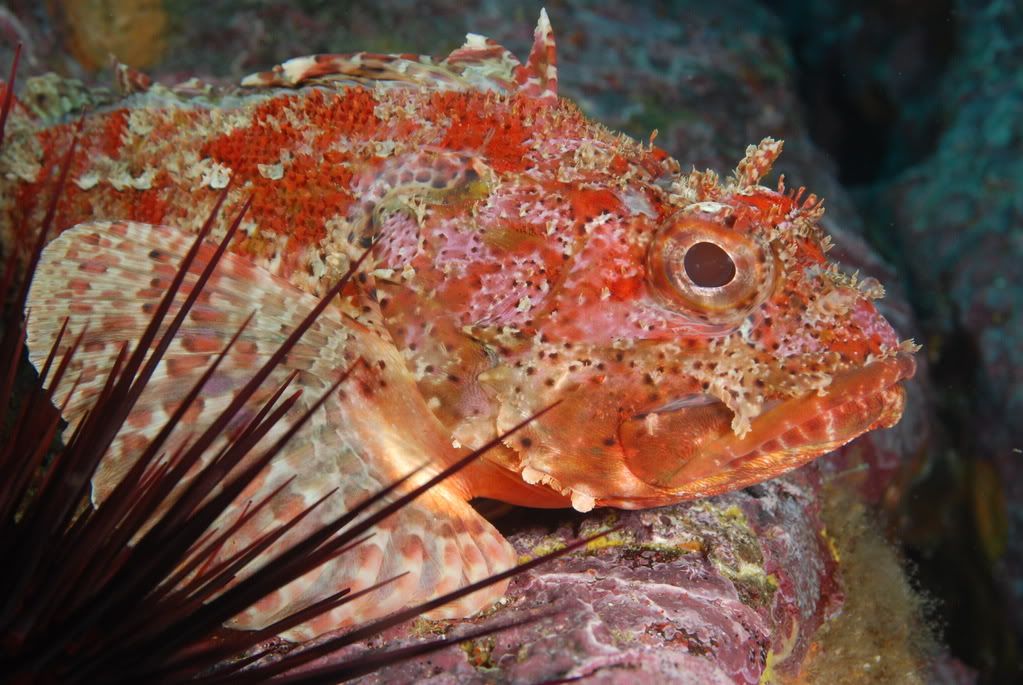
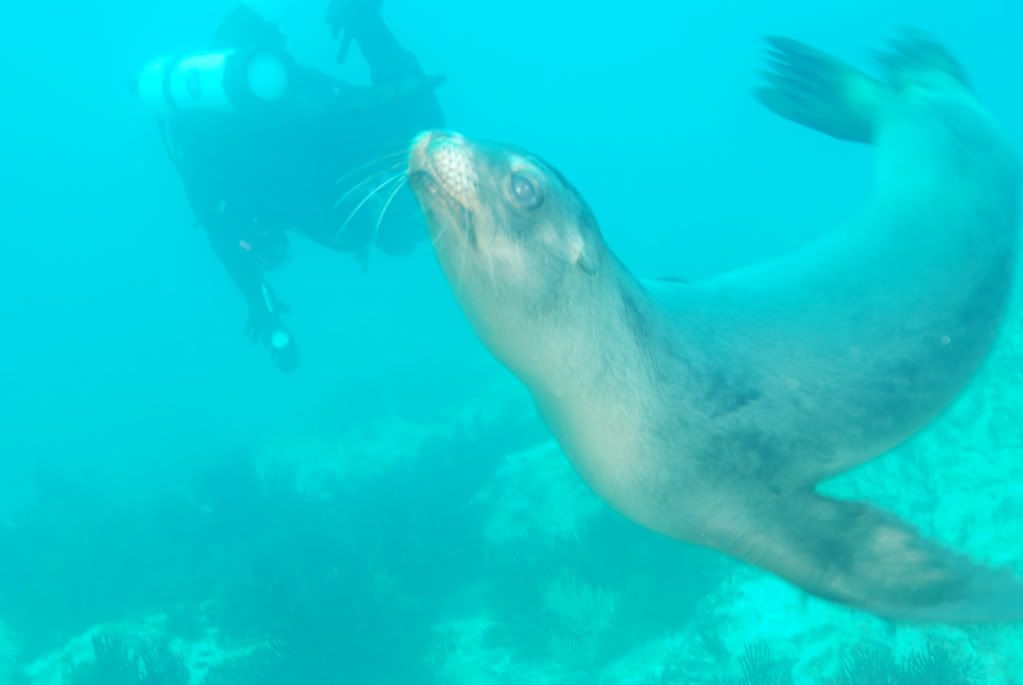
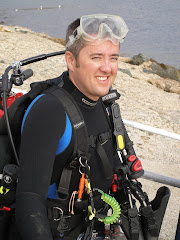
Last, here is my dive buddy and trip planner Roger Uzan. One of his videos can be found on YouTube. Be sure to watch it in HD.
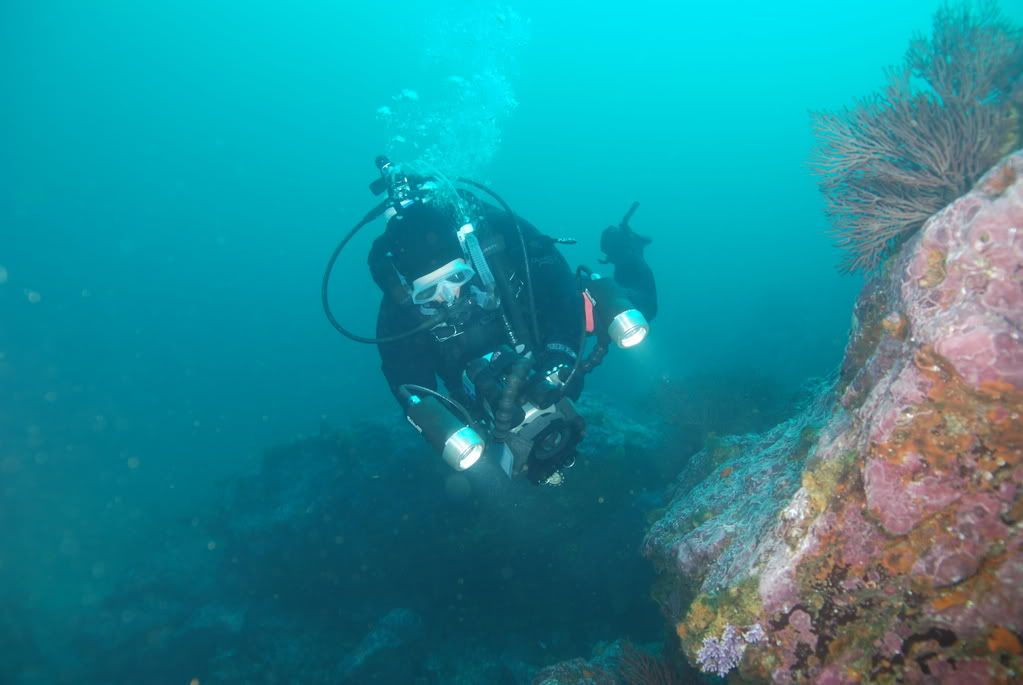

More of my photos can be found at my Photobucket Album and some of Roger's stills can be found at Roger's stills.

Monday, January 19, 2009

Truth Trip VII: The Rest of the Photos

Here is a final selection of photos from the TTVII Trip.

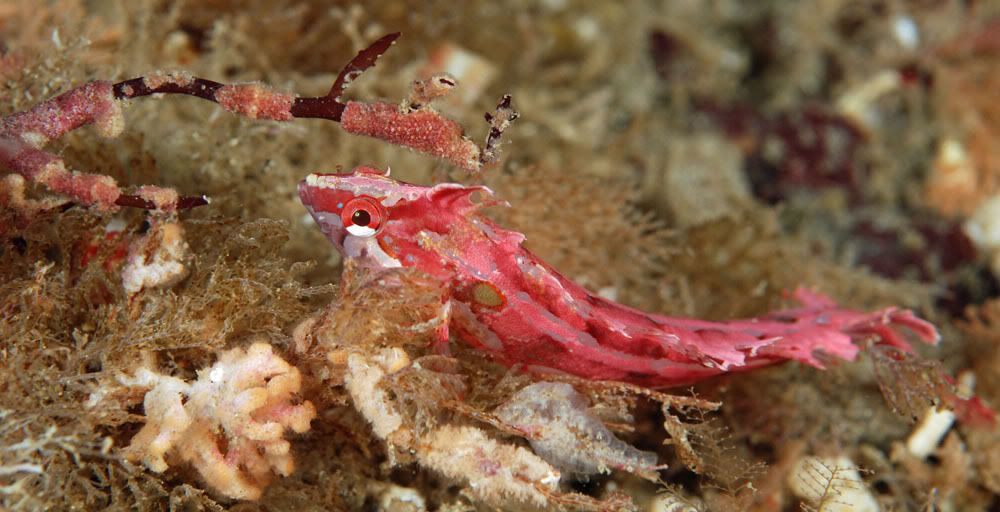
A Crevice Kelpfish


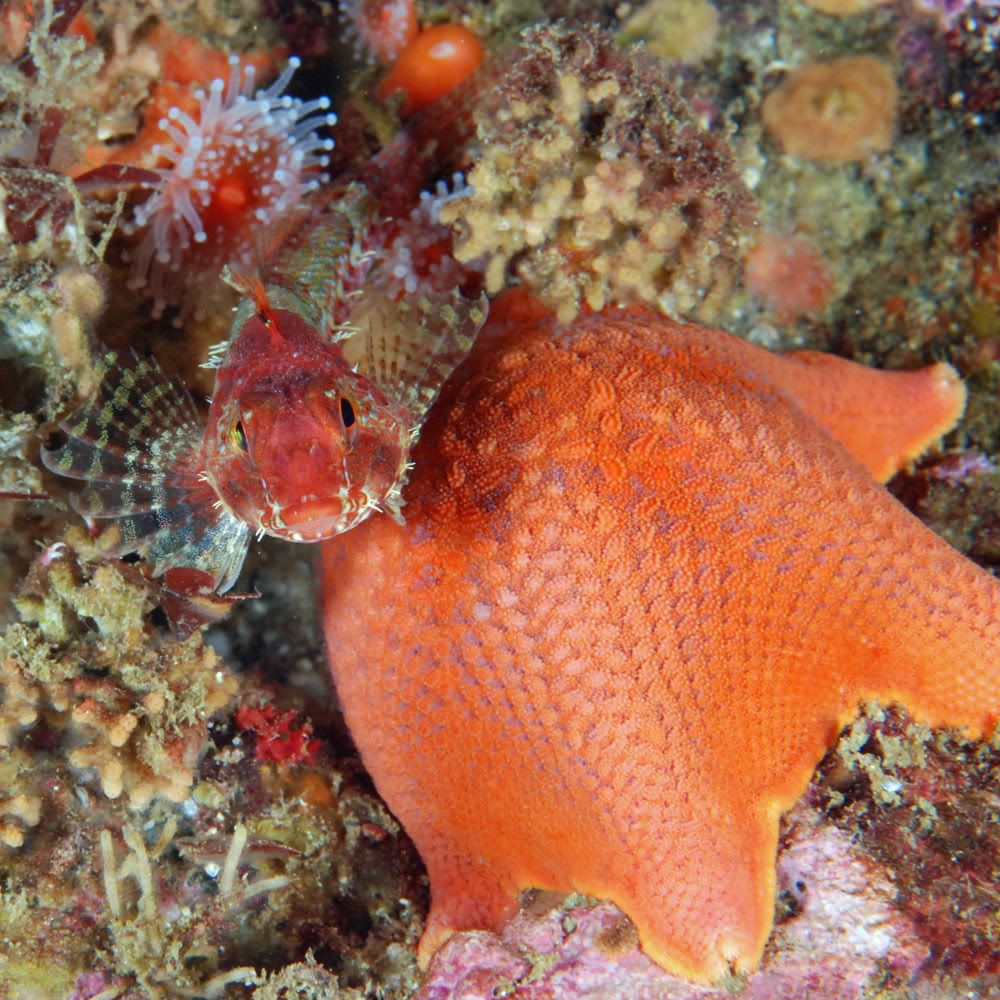
A Snubnose Sculpin


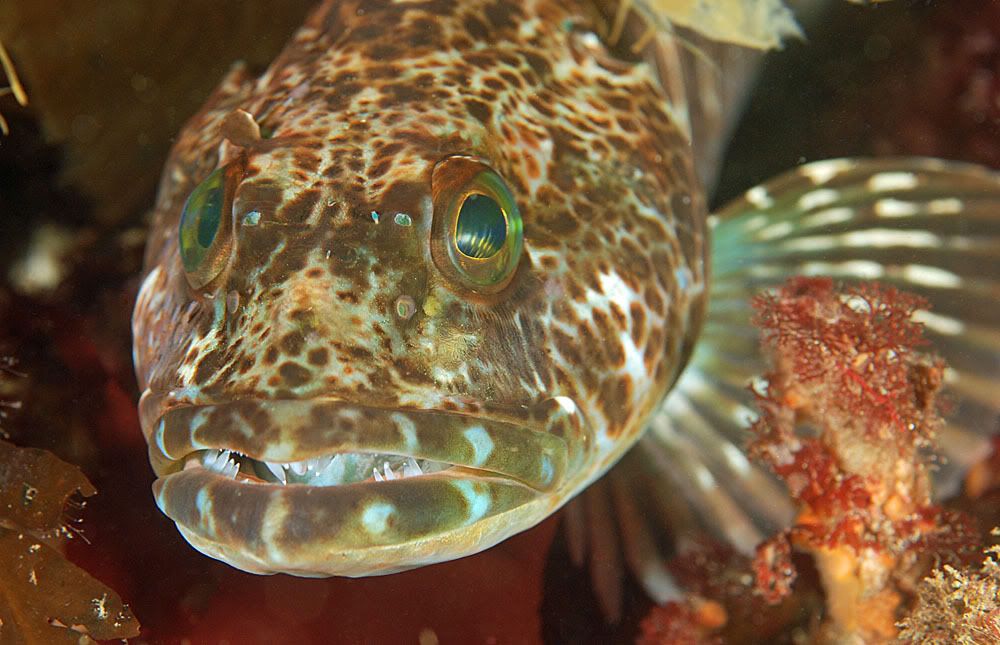
A large Lingcod with some pointy looking teeth


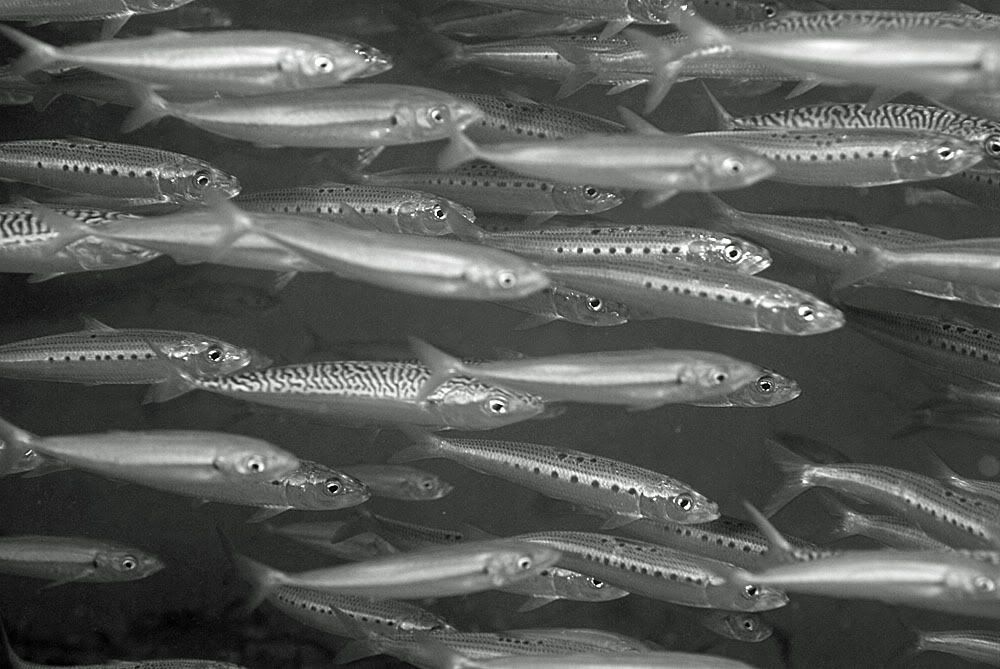
I like how the baitfish come in different color patterns. Some have stripes over their top halves, some have spots, and some are just silver.

The ones with a row of spots are Pacific Sardines. I'm not sue about the stripe-topped ones. They could be small Jack Mackeral, but I'm not sure. And then there are the plain silver ones.


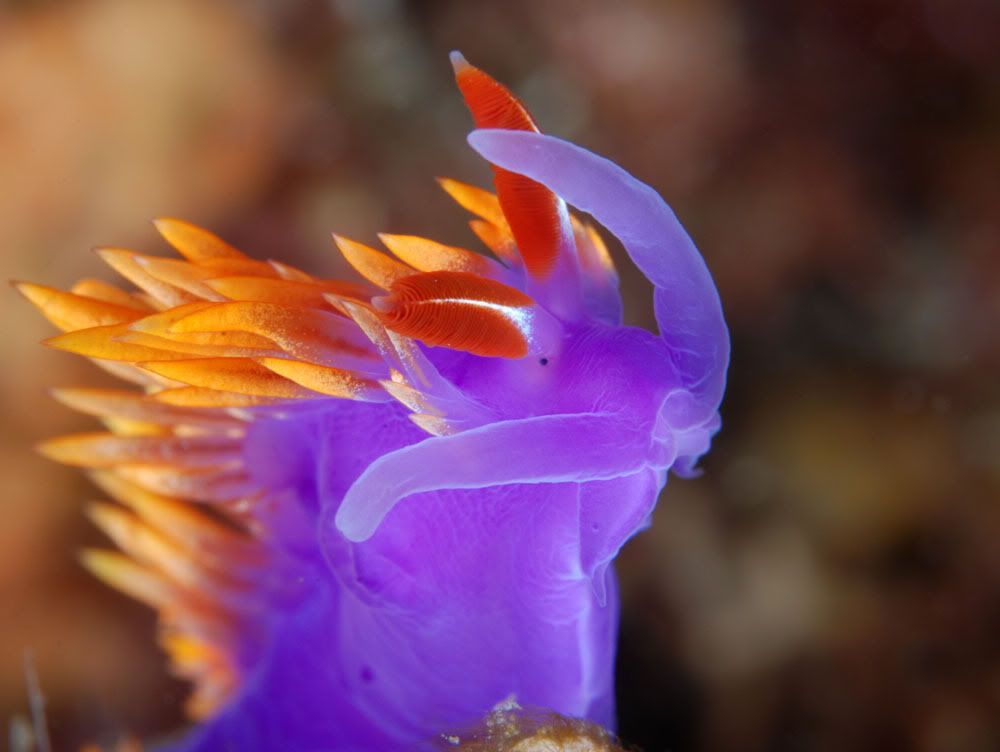
And now for a small assortment of nudibranchs. Usually, if I can't find anything else to take macro photos of, Spanish Shawls are the backup plan. Sometimes they will even pose!


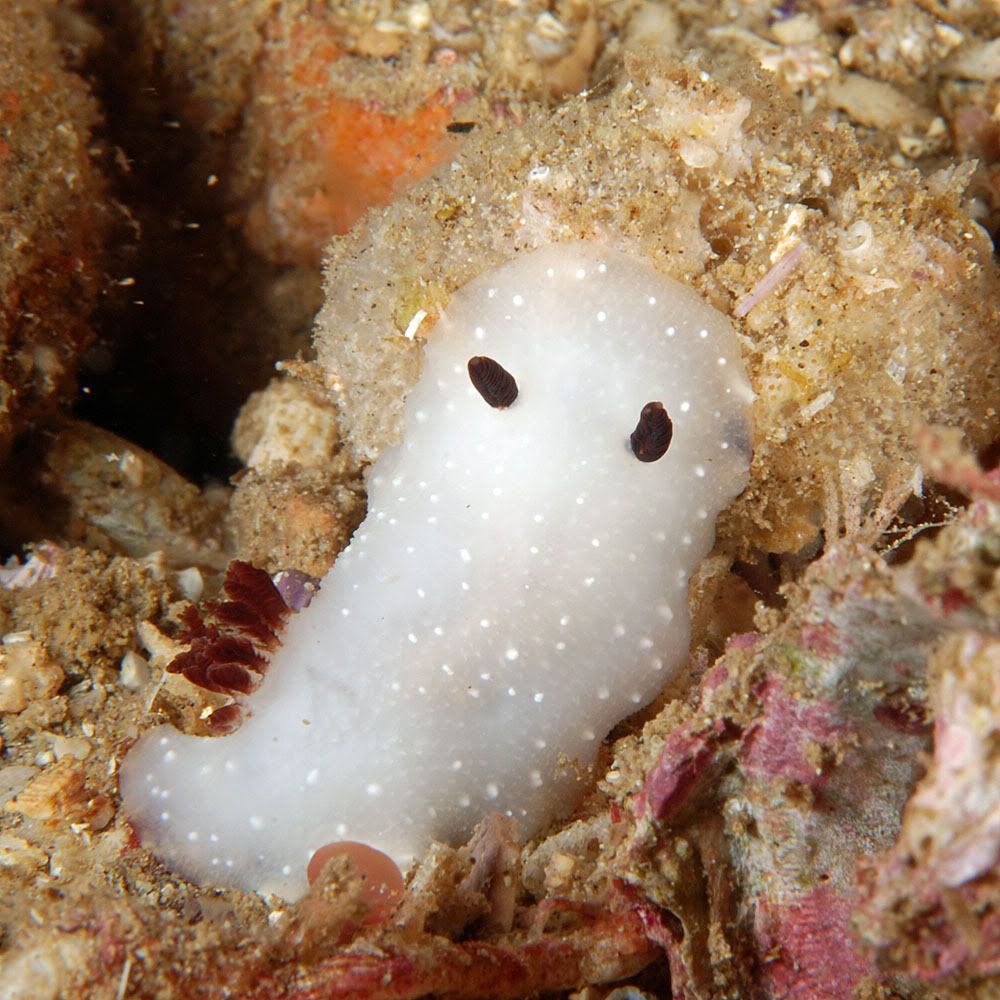
And here's a cute little Limbaugh's Cadlina.


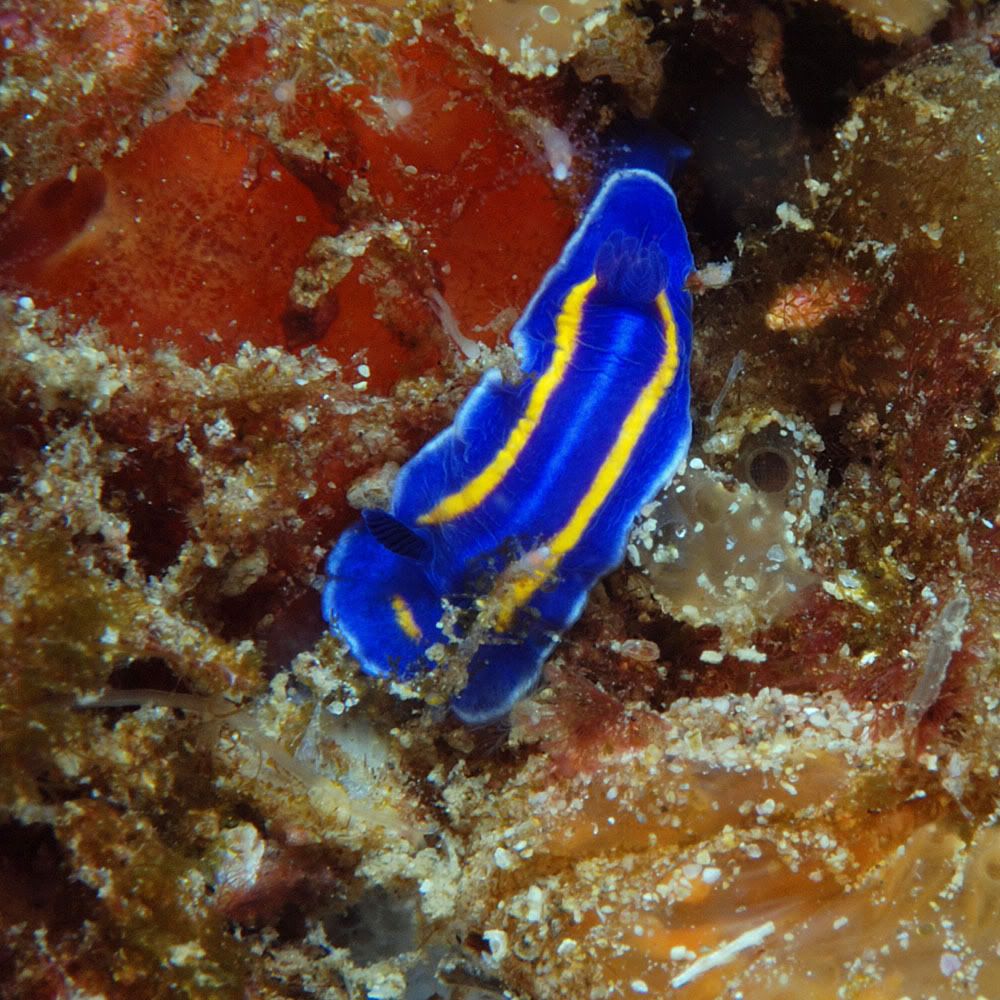
And finally, a boldly colored Porter's Chromodorid.


A few more photos are located in my Truth Trip VII Photobucket album.

Truth Trip VII: How to fnd Octopi Using the Braille System

The Truth Trip is a yearly scuba diving trip to coastal southern California that is organized by members of the Scubadiving.com Diver to Diver (D2D) internet forum. This year was the seventh trip and it was held in mid-September, 2008. I have realized that I never posted any photos from the trip, which was a lot of fun.

Here is another octopus story!

Just sit right back
And you'll hear a tale
A tale of a fateful shot
That started with
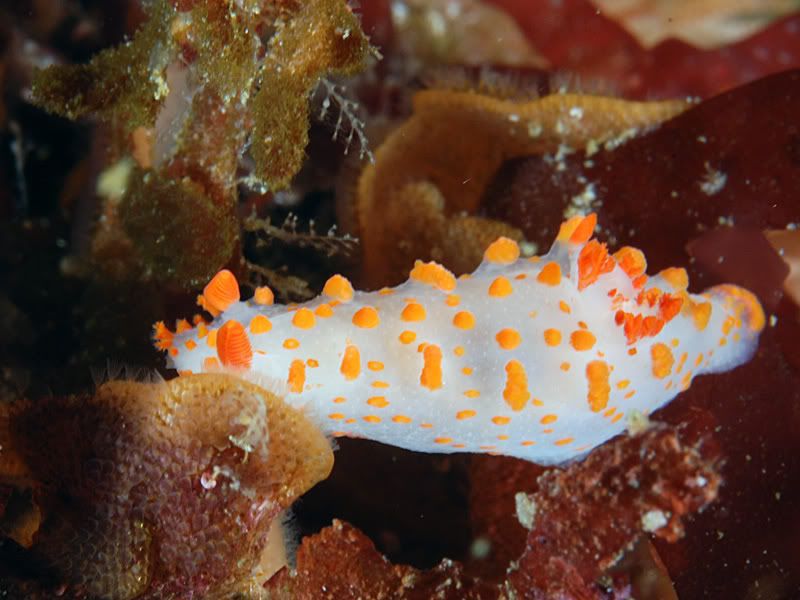
A clown nudibranch
Just climbing across a rock


Each dive, I was looking high and low for octopi. I found two hiding in their crevices, but the best find was purely by accident. I was making way through the reef when I came across the little clown nudibranch below.


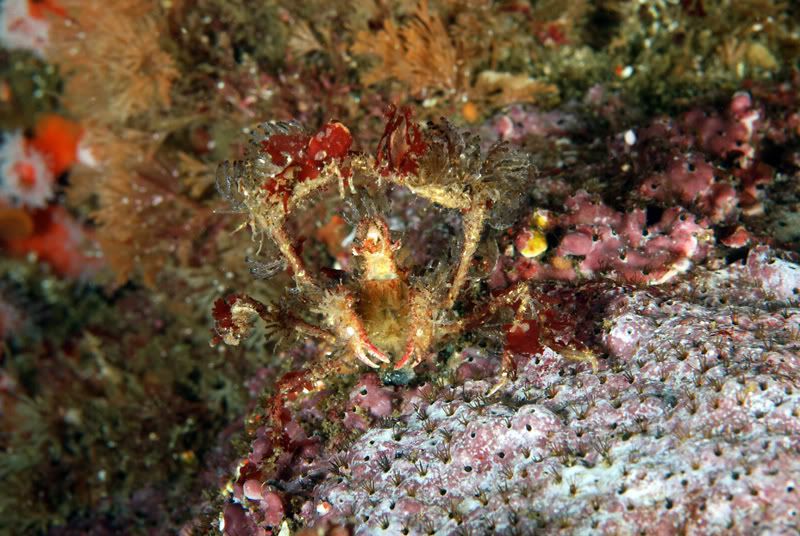
He wasn't in a great position for a photo, so I took a few shots as he crawled through the plants. One particularly annoying piece of kelp kept getting in the way. I brushed it back a few times, but it kept crawling back into the shot. Crawling? That's what I thought. It turns out that my annoying piece of kelp was a good sized (4") decorator crab that was trying to move across my shot. I guided him to a clear area to the side of my nudibranch so that I could take a couple of photos of him. He would wave his claws in the surge, looking like he was doing sumo wrestler moves, with a few "fins to the left" and "fins to the right" moves mixed in.


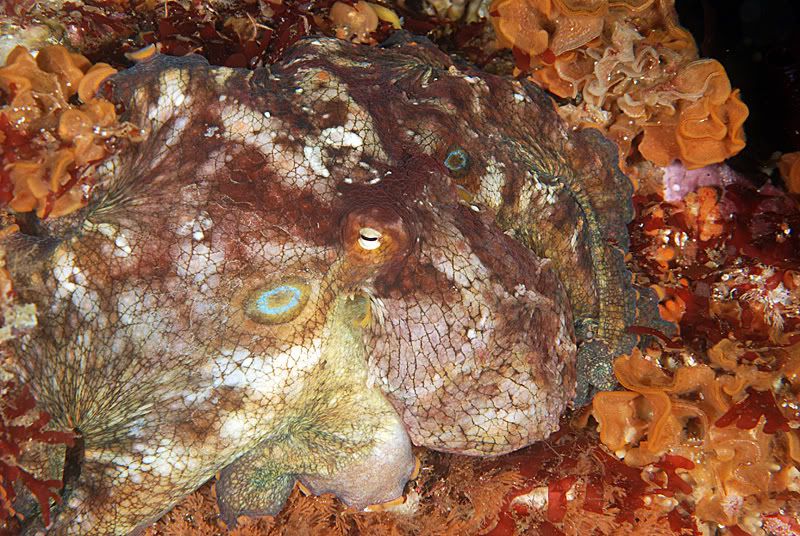
As I was having to deal with said surge, I put up a hand against the rock to steady myself. To my surprise, my point of contact was the middle of an octopus. It took me a few shocked seconds to realize what I had found. The octopus was so flat across the rock that he looked like he had been steam-rolled and was just a flattened image of his three-dimensional self. Luckily, it took the octopus even longer to realize that I had found him, giving me the time to change camera settings and get off some shots before he crawled into his hole right below where I had found him.

Sunday, January 18, 2009

La Jolla Shores Dive - January 11, 2008

I went down to La Jolla for a couple of dives yesterday morning. You may not have noticed, but Saturday night, the moon was at its perigee - the point in its orbit in which it is closest to the earth. Its actually 31,000 miles closer than at its apogee. Apparently, the moon appeared 14% larger in the sky and up to 30% brighter. I can attest that it was a big and bright moon. The other effect of a close moon is a perigean tide. At La Jolla, the high tides was + 7.0 feet and the low tide was -1.8 feet. The effect was a slight bit more on Saturday. For those of you that dive at the Catalina dive park, the tide was so low that upon entering or exiting the water, you had to climb up/down from the bottom stair landing and over the rocks. I hear that it was quite hard. At high tide, the water was above the middle stair landing.

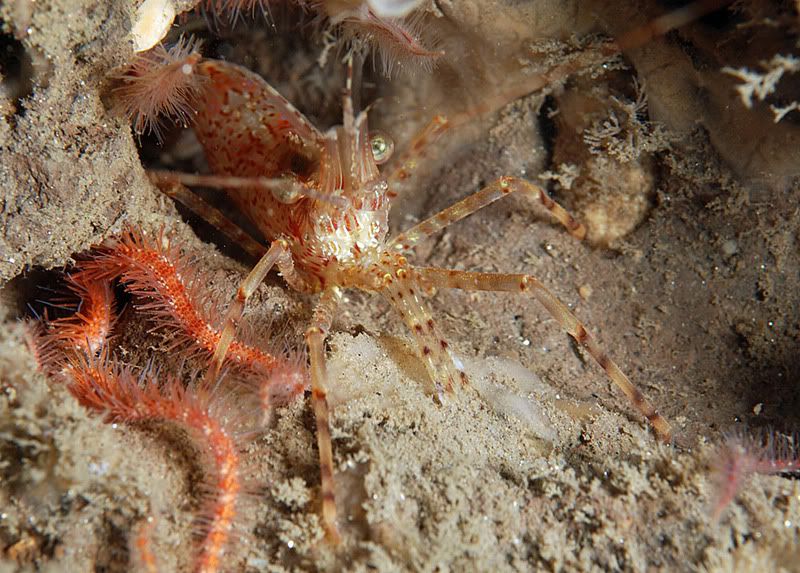
I hit the water around high tide. The beach entry is a shallow slope, so the higher tide made for a very long swim before dropping down. The edges of the La Jolla canyon at 50-100 feet are small shelf walls that are very eroded with lots of holes and crevices. That's where were I found this Coonstripe Shrimp and his Spiny Brittle Star roommate.


On my second dive, I finally found a fringehead. His heckling of me while I tried to get a good photo in the low visibility helped me to identify him as a Sarcastic Fringehead. "You think you're a photographer? I've seen better efforts by a blind person."

Speaking of visibility, the first dives was okay at about 15 feet. What I hadn't counted on was the huge 8.8 foot swing in the tides would drag a lot of crap and particulate over the lip of the canyon as that huge amount of water was pulled away from the beach. I bet the incoming tide was very clear (and cold) as water came in from the canyon.

I present...the Sarcastic Fringehead.


There were a few nudibranches on the dive, but nothing too exciting. I did see a pretty Navanax, but none of the photos were worth posting. Here is a token nudibranch for the nudi lovers.

A White-Spotted Dorid


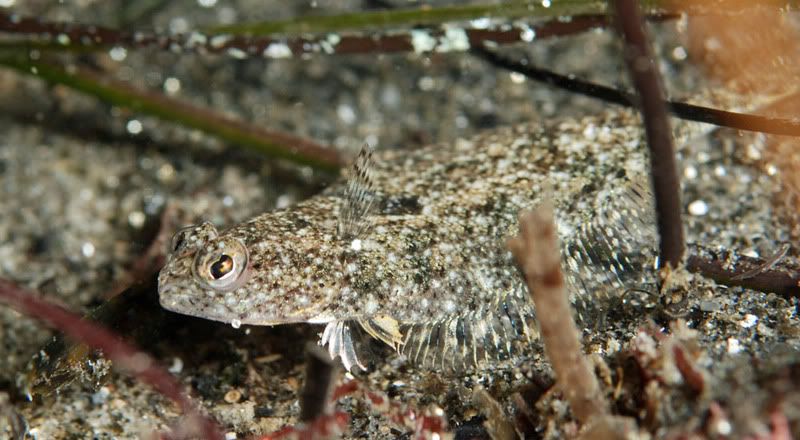
There were little Speckled Sanddabs all over the place.


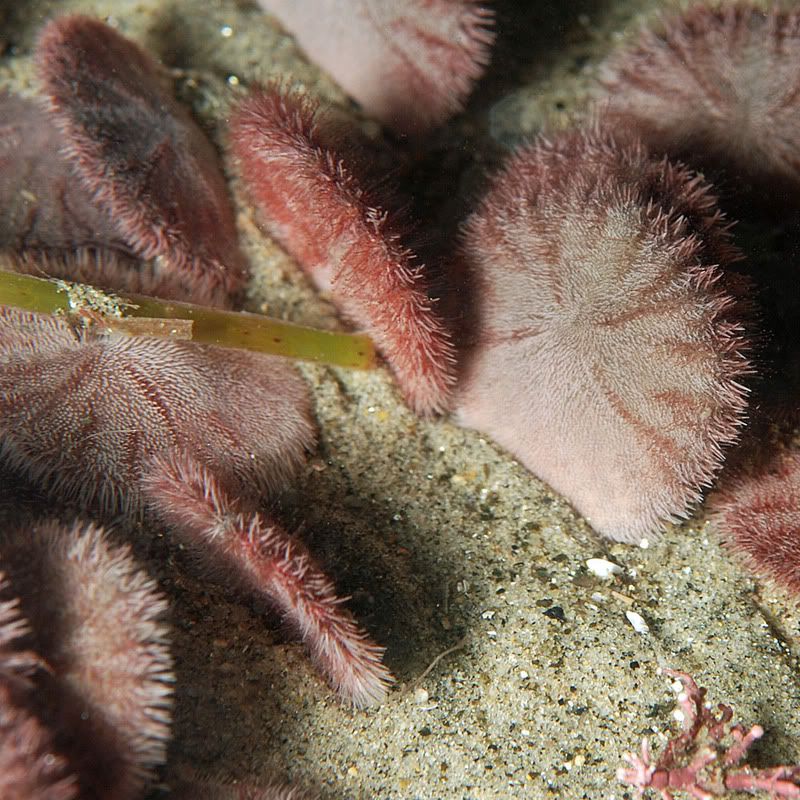
On the way in, you cross hundreds of feet of sand dollar beds. Most of the sand dollars were more like "sand fifty-cent pieces". I guess that's because of the economy and recession. Everything is worth 50% less. Many people probably don't know that they are really a pinkish color before they die and dry out, becoming the white skeleton that you find on the beach. They stand on end in the sand and use their short bristles/arms to feed as the water washes back and forth. They are mostly oriented toward the beach to best feed off of the waves that sweep in and out. Some of them even have little trails behind them where they have changed position. Once you find the sand dollars, you don't even need a compass to find the beach exit. Just head toward shallow water and go in the direction that the dollars point.

Living Sand Dollars.


Dive 1 Summary

Time under water: 61 minutes
Maximum Depth: 101 feet
Temperature: 49 deg F

Dive 2 Summary

Time under water: 53 minutes
Maximum Depth: 64 feet
Temperature: 54 deg F

Doesn't include that %@$ quarter mile swim from the beach to where you can at least drop down twenty feet.

Wednesday, April 9, 2008

Classic Photo Post

I haven't been diving in a few weeks, but I am going out tomorrow night. Local reports say that the La Jolla shores area has been cold (mid to high 40s) with good visibility. It should be a good night.

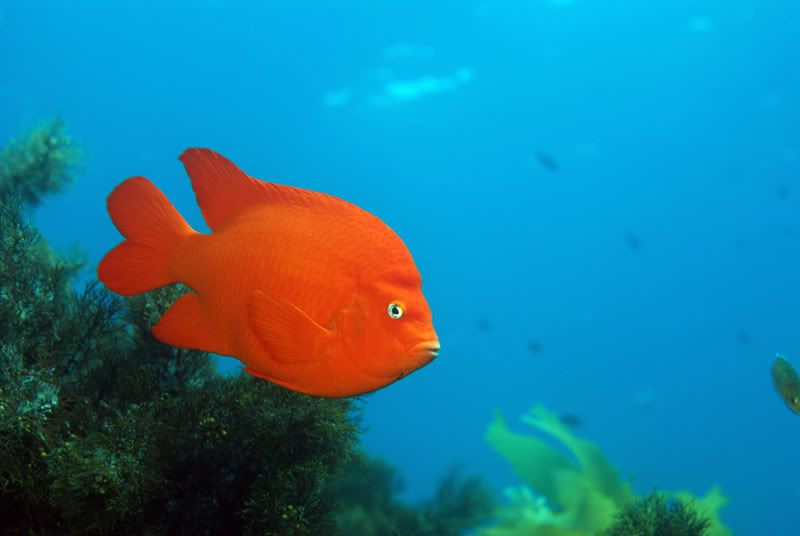
Here is a classic photo from right after I got my Nikon D80. In fact, I think that this was from my first outing with the camera. I took the photo at Casino Point at Catalina. The subject is a Garibaldi, the state marine fish of California. Garibaldis are a form of angelfish. They are fearless and willing photo models. Its a good thing that they are a protected species, because it would be easy to catch a lot of them. The lens used was the Nikon 60mm macro.

Friday, January 11, 2008

Whale Watching in Maui

WARNING: This post contains a large number of whale photos. If you don't like whales, feel free to move along. There's probably a blog about housecats somewhere nearby.

On our last whole day in Maui, we went out whale watching with the Pacific Whale Foundation on their boat the Ocean Explorer. This is my favorite non-raft or RIB boat. It seats about 40 with most of the seats up front. Whale Foundation members get to board first and choose their seats (and at a discount, too, so be sure to join).


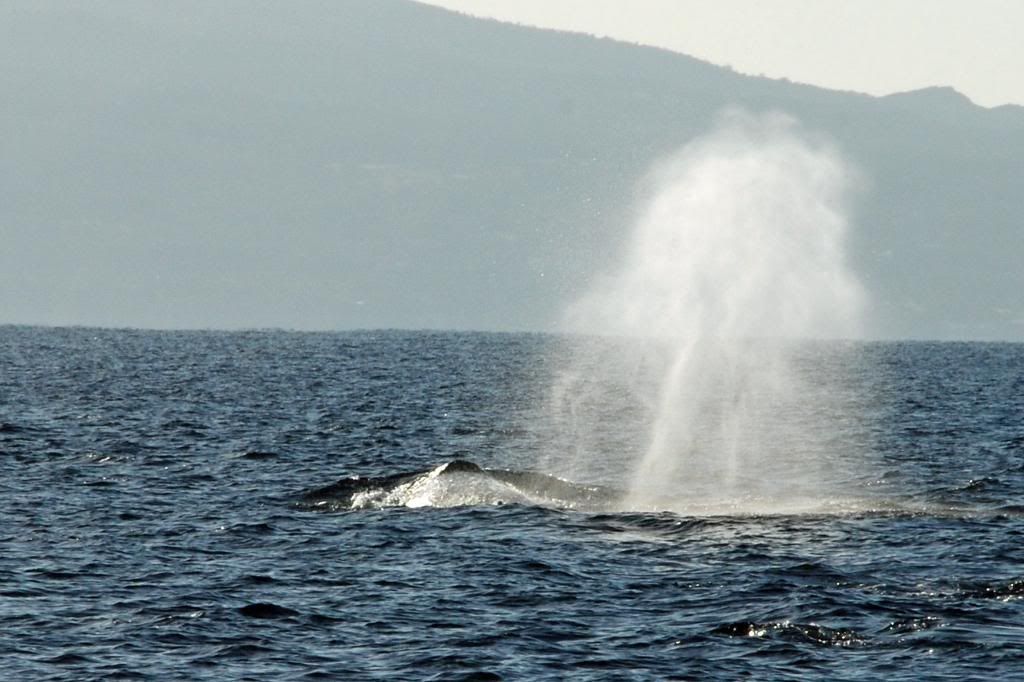
The whales were more active than I have ever seen. We had been seeing lots of them from the hotel balcony and beach, so we had high hopes. We quickly found solo whales and small groups to watch. We would find them by spotting their spouts and calling them out to the crew.


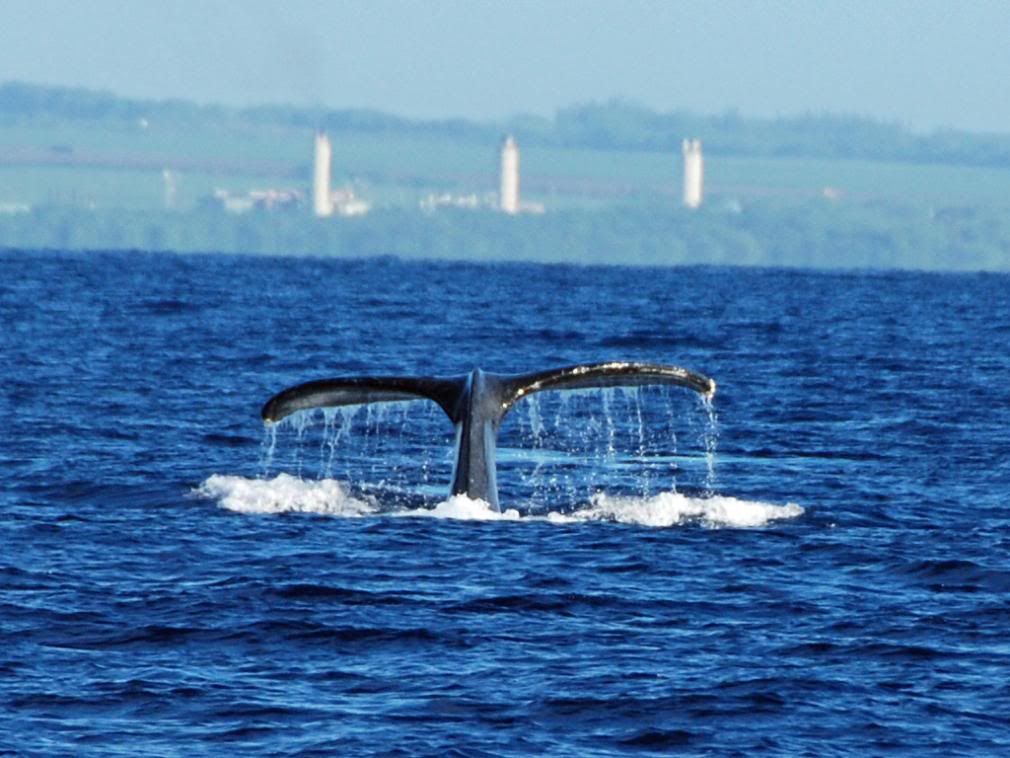
Most of the time, we would just end up with a presentation of the tale, if anything.


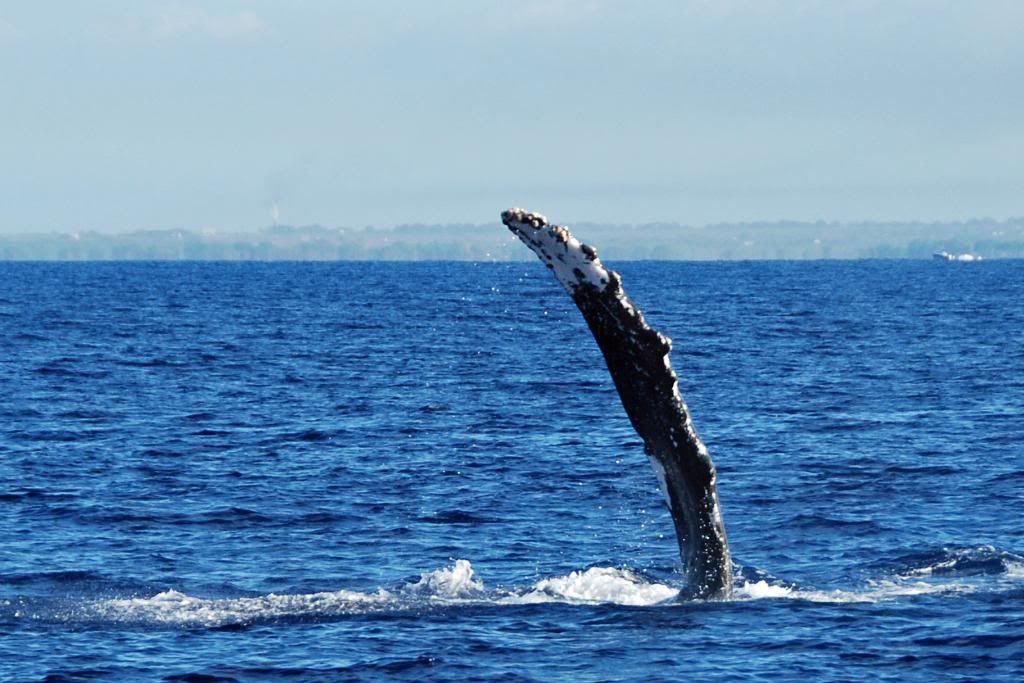
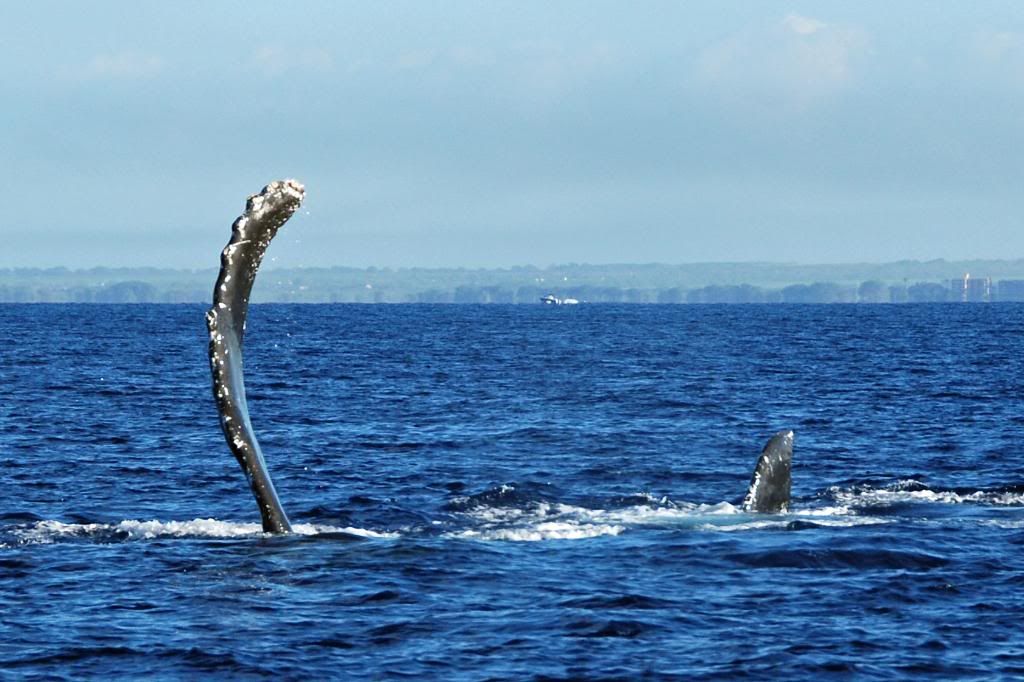
Sometimes the whales like to wave and slap their pectoral fins. Kind of a humpback hello.


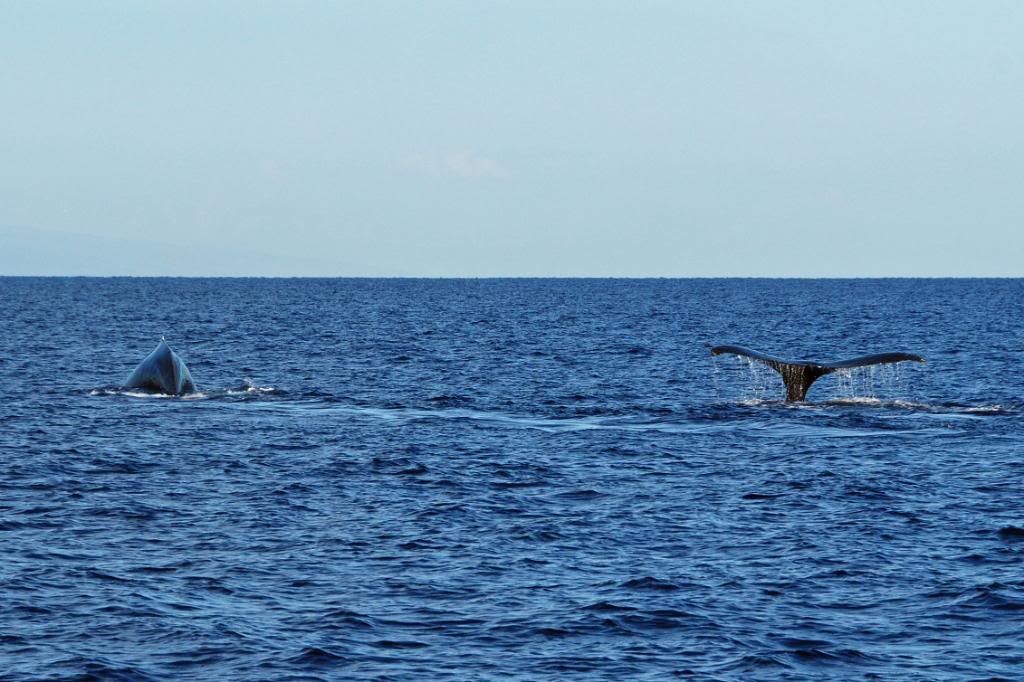
This whale was cruising along on his side. You can see his tail sticking out of the water behind his pectoral fin.


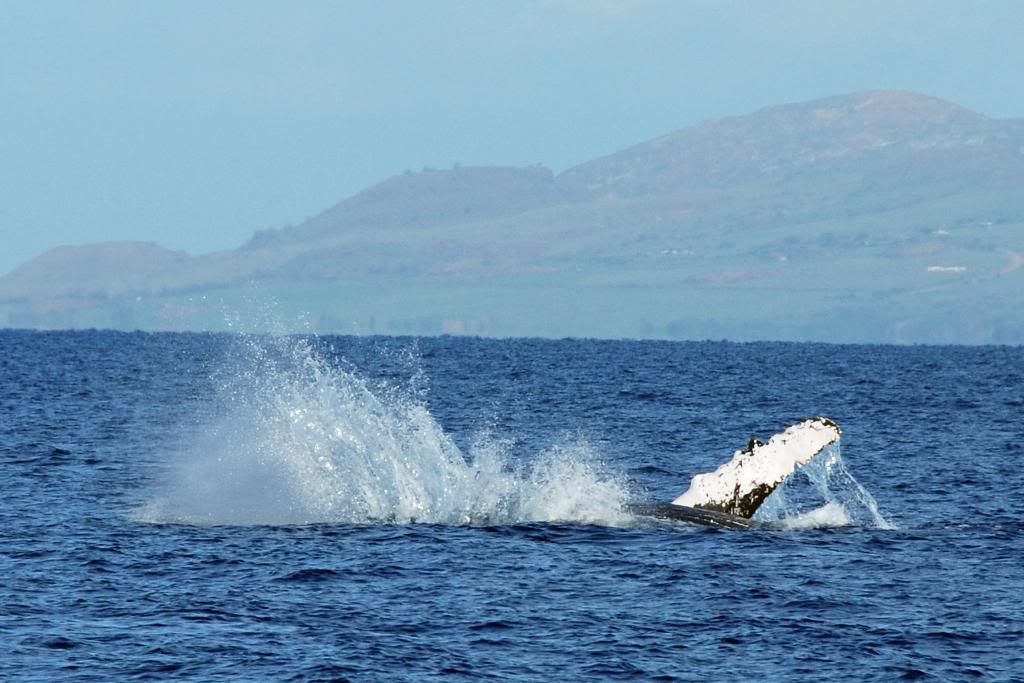
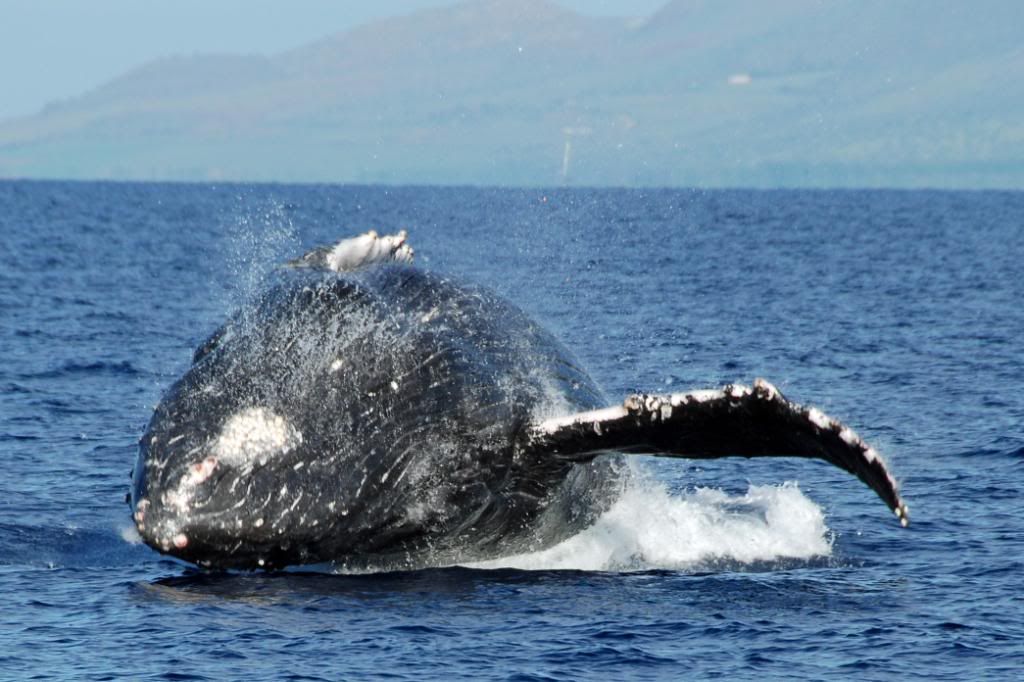
This whale was fun. It was barrel-rolling through the water. It would roll onto one side and slap that fin, keep rolling onto its back raising the other fin, and then slapping the second fin on the water. This whale made several rolls. This photo was taken when the whale was on its back.

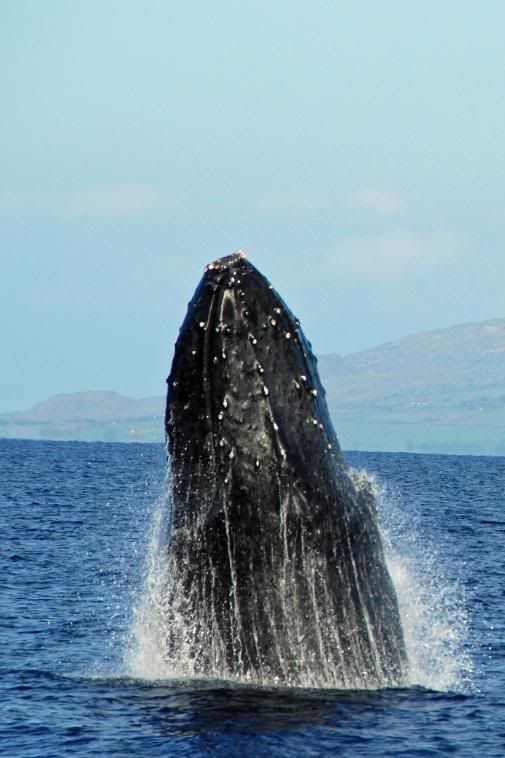
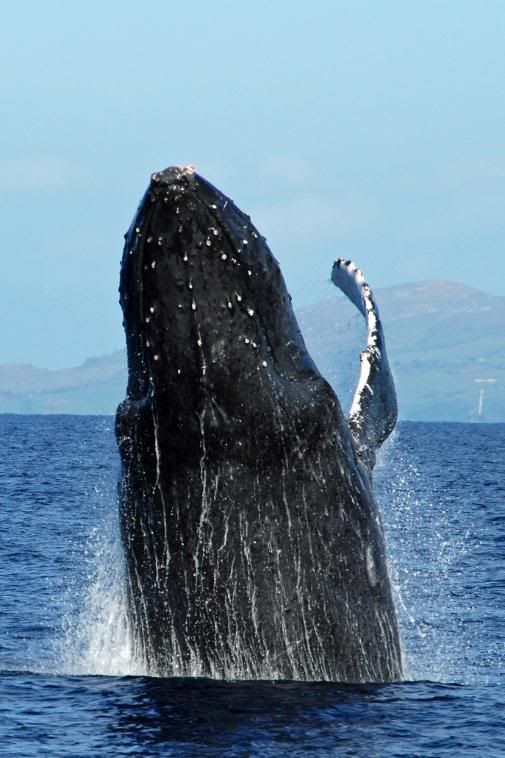
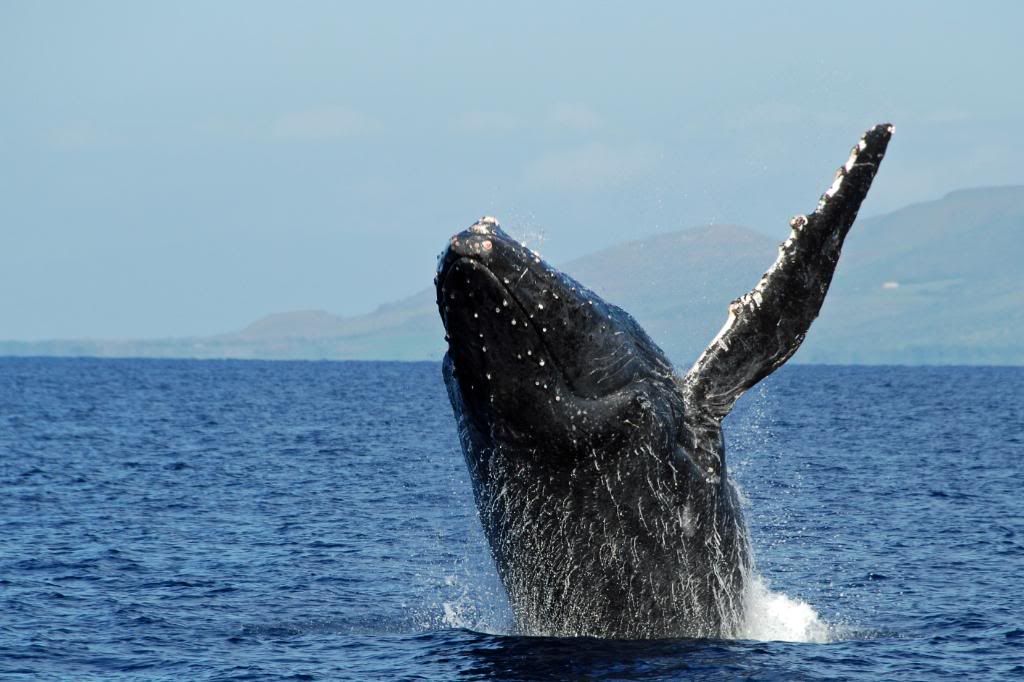
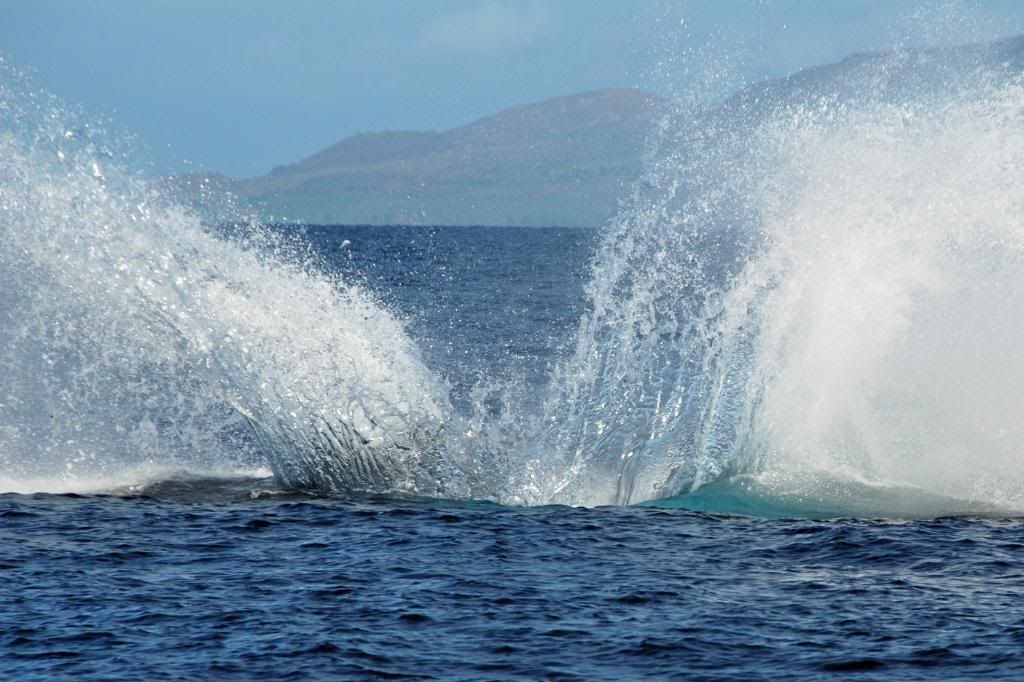
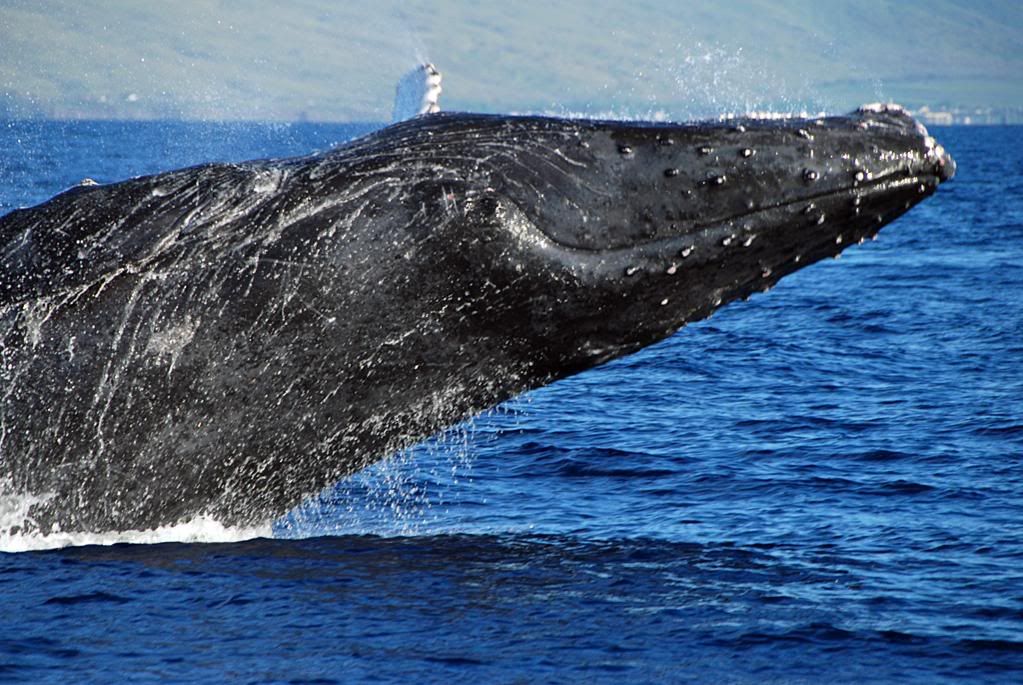
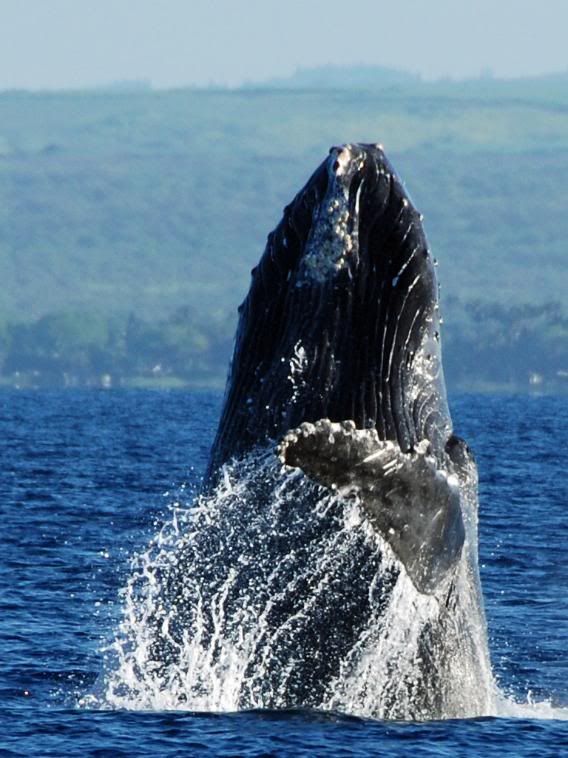
Of course everybody's favorite moment is when the whales "breach", or jump out of the water like in the next sequence of photos. They sometimes launch their entire body (except for their tail) out of the water.


I caught this one as it was crashing into the water onto its back. Although it looks like it is smiling, its really upside down.


And finally, here is a whale waving goodbye.


As we head back to the harbor (and were unable to pursue whales), we saw two or three whales doing a series of ten breaches in less than two minutes. It was an impressive display.

Saturday, January 5, 2008

Shore Diving Mala Pier

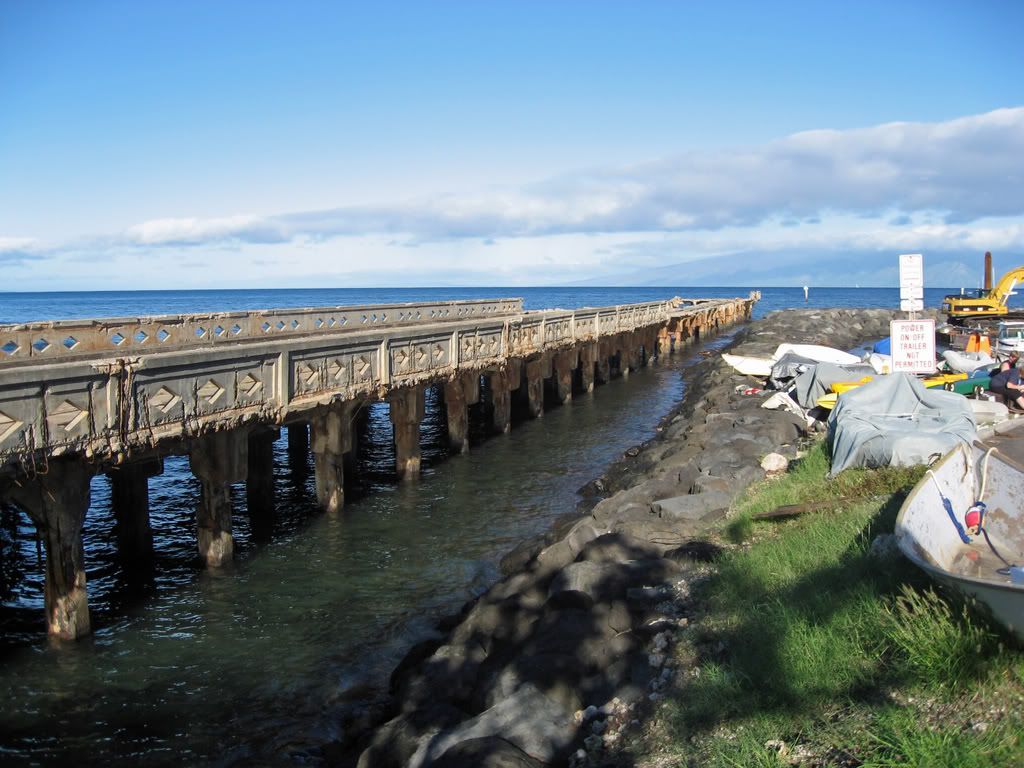
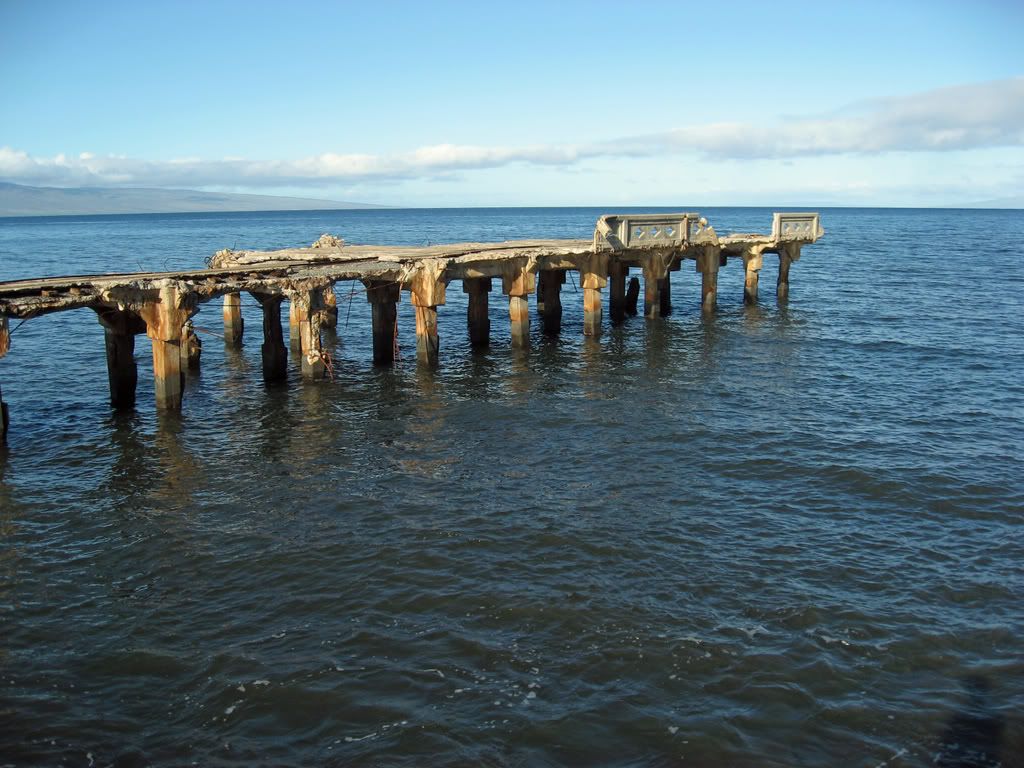
Today I did my first shore dive at the wreckage of the Mala Pier. This was recommended to me by Bob Grecko and many others. The Mala Pier was built in 1922 for loading sugar cane. It was destroyed by a hurricane in 1996.


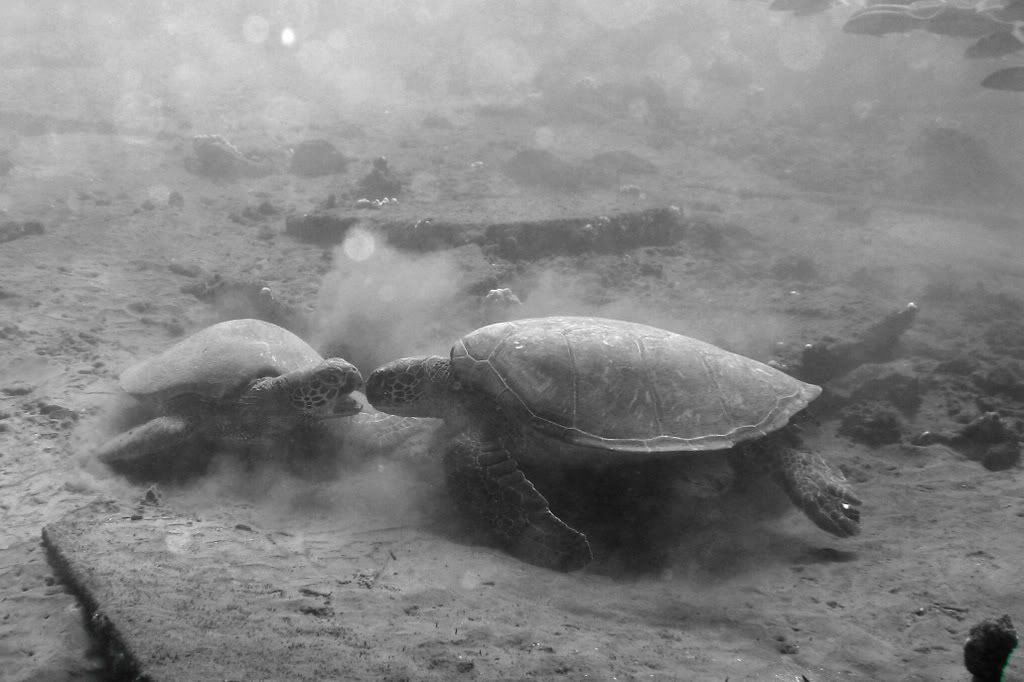
It was 300 feet long, but half of that is rubble in water up to 30 feet deep. It has developed a good bit of coral growth and is inhabited by turtles (saw five), white tip sharks (others saw some, but I wasn't looking), and frogfish (looked hard but couldn't find any). There were also quite a few Imperial Nudibranches, always in pairs.


These two turtles were amusing. The one on the left was sitting on top of the silty sand. The second one swam over and sat next to the first who wasn't very happy about having company. You can see in the close-up how he expressed his displeasure. The second turtle then swam away.


I didn't find any frogfish, although I am told that they are out there. I'm going back out tomorrow to dive two tanks and find them. On this trip, I was shooting my D80 in a macro setup (60mm lens and dual DS-125s) and I brought my Canon SD700 for wide angle.

Oh yeah - and the ocean ate my mask. Another sacrifice to the diving gods.